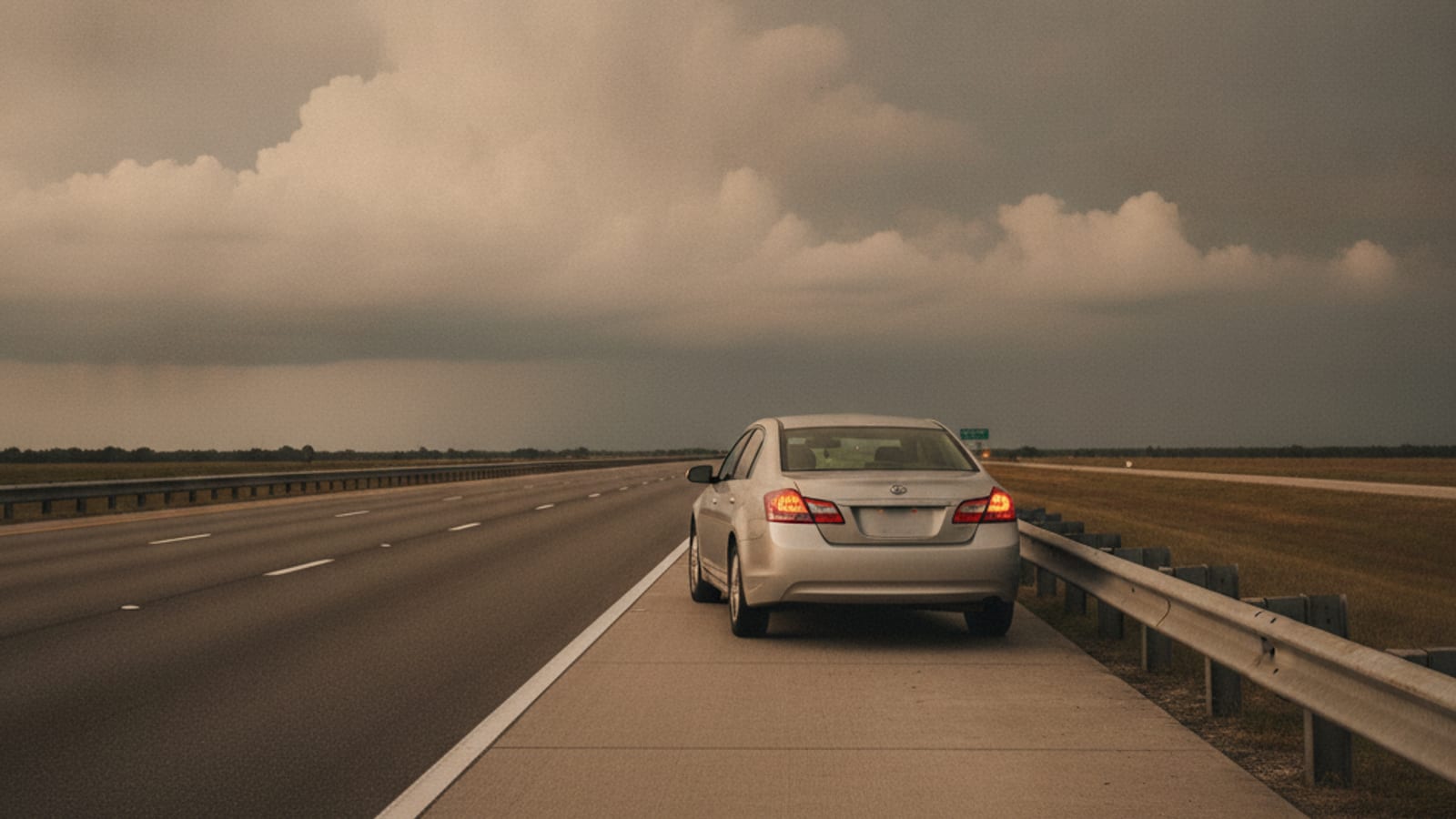
If your vehicle is blocking a travel lane, Florida law requires you to make every effort to move it so it does not block traffic. Get as far right as you can, onto the shoulder if there is one, and put your hazards on. Once you are out of the flow of traffic, stay inside the vehicle and wait for help. Get out only if there is fire, smoke, or another immediate danger that makes staying inside unsafe, and then move away from traffic. Then dial *347 on your cell phone. That is how you request Florida’s Road Ranger Service Patrol. Coverage and hours vary by road. FDOT describes the service as limited no-cost highway assistance, not a tow to a shop, hotel, or driveway.
What Road Rangers actually do
Road Rangers is a Florida Department of Transportation program. The patrol handles traffic incident work, clears debris, and offers limited no-cost help to stranded motorists on covered roads. Motorists are not charged for the service. While you are being assisted, you can make up to two local phone calls for free. Rangers should be able to locate you within 15 to 30 minutes unless they are held by an emergency such as a crash. Confirm current availability through FDOT rather than assuming every stretch of I-4 or a nearby toll road is being patrolled at that hour. The official FAQ is on FDOT’s Road Ranger page.
The one thing they won’t do
If the help you need exceeds what Road Rangers offer, they move the disabled vehicle out of the travel lane. FDOT is direct about the next step: FHP contacts another towing service at the motorist’s expense. That is not destination towing. Once you are safely out of traffic, call (321) 321-9797. Leave the location, vehicle, and where the car needs to go on the Quick Tow Orlando line. We connect callers with independent operators. The operator is responsible for capability, timing, price, and terms.
Where I-4 actually gets people
I-4 through Orlando carries theme park traffic, airport traffic, daily commuters, and freight, often in the same few miles, and that mix shows up in where breakdowns cluster.
The tourist exit cluster, Exit 62 to Exit 75A. This stretch carries dense theme-park traffic: World Drive into Disney, US-192 into the Kissimmee strip, Osceola Parkway toward Animal Kingdom, and the exits feeding International Drive and Universal. Stop-and-go traffic during park opening and closing windows is common here, and grinding, low-speed traffic is hard on an already-stressed engine.
Fairbanks Curve, near Exit 87 in Winter Park and Maitland. This bend north of downtown is a known slow-down in wet weather, and the posted 50 mph limit is there for a reason. If your car starts acting up anywhere near this curve, get off at the next safe exit rather than pushing on.
The downtown I-4/SR-408 interchange. This stacked interchange puts two major roads on top of each other. A breakdown here can back up both corridors at once.
Champions Gate and the western stretch. Active construction continues here as FDOT’s “Beyond the Ultimate” program widens and reworks this growing area, so lane shifts and shoulder closures are a live condition.
Why summer tires fail more often on I-4
Florida summer heat and long highway runs are hard on tires, especially older or worn ones on a loaded vacation vehicle. Heat can raise tire pressure. A sudden blowout on I-4 is a reason to get out of the travel lane if you can, then stay inside once you are out of traffic unless fire or smoke makes that unsafe.
Check FL511 before you’re in the middle of it
FL511 is FDOT’s official traffic service, with real-time incident reports, live cameras, and message signs for the whole state, including I-4 and the toll roads around Orlando. It’s worth having open any time you’re driving through the metro, since it’ll tell you about a crash or lane closure before you’re stuck behind it.
Road Rangers on the toll roads too
Florida’s Turnpike Enterprise also uses the Road Ranger patrol on toll roads around Orlando, reachable the same way, dialing *347. Coverage and hours vary by road. If you break down outside a covered window, the same call still connects you to FHP, who can send help or arrange a private tow at your expense.
If you break down during a hurricane evacuation
Florida uses Emergency Shoulder Use rather than contraflow during major storms, opening the paved shoulder on key evacuation routes, including I-4, to add capacity without blocking supply routes into the storm zone. Tolls get suspended for the duration. If your car gives out during an active evacuation, get onto the shoulder if it’s open for travel, keep your hazards on, stay inside once you are out of traffic unless fire or smoke makes that unsafe, and call for help. Traffic in an evacuation doesn’t stop for a disabled vehicle the way it might on a normal day.
For more on what to do the moment your car won’t start or starts running hot, see our guides on a car that won’t start and a vehicle after overheating, or check our roadside assistance and jump start services.
Frequently asked questions
Will FHP Road Rangers tow my car off I-4?
No. Road Rangers provide limited no-cost highway help and can move a disabled vehicle out of the travel lane. They do not provide destination towing. If your car needs to go somewhere else, that is a private tow at your own expense.
How do I reach Road Rangers?
Dial *347 on your cell phone. FDOT says they should be able to locate you within 15 to 30 minutes unless they are detained by an emergency. The service is free. Coverage and hours vary. Confirm details on FDOT’s Road Ranger FAQ.
Why is Fairbanks Curve a concern?
It is a bend near Exit 87 in Winter Park and Maitland. Wet weather and the posted 50 mph limit make it a poor place to keep rolling if the car is already failing. Get off at the next safe exit if you can.
Why do tires blow out on I-4 more often in summer?
Long highway runs in Florida heat are hard on older or worn tires, especially on a loaded vacation vehicle. Heat can raise tire pressure. Treat a blowout like any other highway breakdown: move out of traffic if you can, then stay inside unless fire or smoke makes that unsafe.
Is FL511 worth checking before I drive?
Yes. FL511 is FDOT’s official real-time traffic service, covering incidents, congestion, and live cameras for I-4 and the toll roads around Orlando. Checking it before or during a drive can help you avoid a backup before you’re stuck in it.
What if I break down during a hurricane evacuation?
Get onto the shoulder if Emergency Shoulder Use is active and it’s open for travel, keep your hazards on, stay inside once you are out of traffic unless fire or smoke makes that unsafe, and call for help. Evacuation traffic moves fast and doesn’t stop the way normal traffic does.