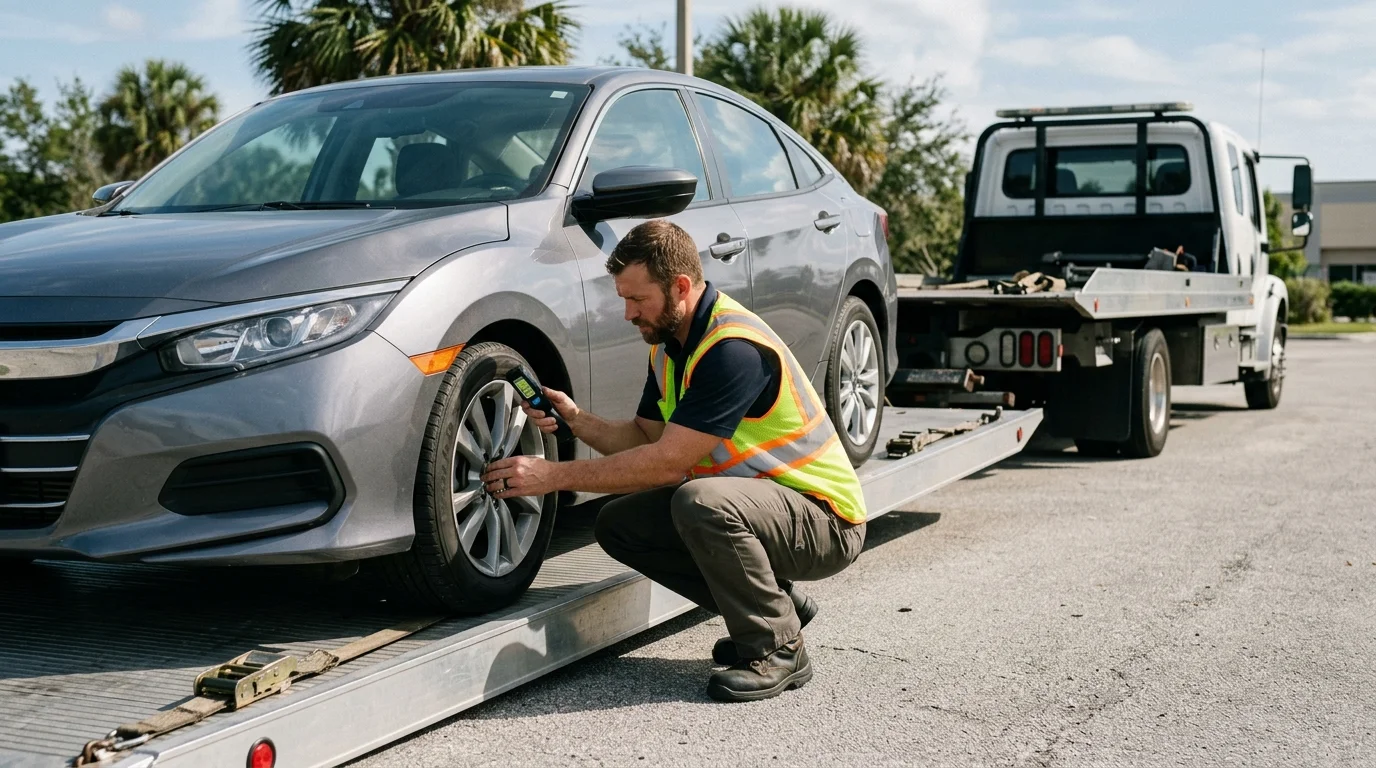
A hybrid car can be towed, but not automatically like a gas car. The correct method depends on the exact model, drivetrain, damage, and current manufacturer guidance. Give the operator those details before the truck is selected.
Start with the exact vehicle and drivetrain
Begin with the year, make, model, and trim shown on the vehicle. Don’t stop at saying it’s a hybrid. Two cars with similar names may have different drivetrains or towing instructions.
Tell the operator whether the vehicle is front-wheel drive, rear-wheel drive, or all-wheel drive, if you know. If you’re unsure, say so. The vehicle identification number may help the operator confirm the exact configuration, but don’t guess from appearance.
Also explain what happened. A hybrid that simply won’t start presents a different loading decision from one with collision damage. The same applies when a wheel is locked, a tire is missing, or the car sits partly off the pavement.
Before calling, gather these details:
- The complete vehicle name and model year
- The trim or drivetrain, if confirmed
- Whether the car starts or powers on
- Whether it can shift into neutral
- Whether the steering responds
- Whether every wheel can roll
- Any visible damage or dashboard warning
- Your exact location and access conditions
Your location matters, too. A hybrid stopped beside I-4 requires different access planning from one inside a Winter Park garage. The same vehicle may need another approach in a narrow International Drive lot or beside SR 408.
Share only what you can confirm. Photos can help show wheel position, body damage, clearance, and nearby obstacles. They don’t replace the vehicle’s owner guidance, but they give the referred operator useful context before arrival.
Explain why one towing method doesn’t fit every hybrid
The word “hybrid” covers several vehicle designs. The badge alone doesn’t tell an operator which wheels may remain on the road. It also doesn’t confirm whether the car can safely roll, steer, or enter neutral.
That’s why hybrid car towing starts with the exact vehicle. The manufacturer’s current instructions may require a particular wheel position or loading method. Those instructions can also change by model year, trim, and drivetrain.
A flatbed carries the vehicle with its road wheels supported on the bed. That often makes flatbed towing for a hybrid car the first method worth checking. It still requires a suitable loading plan. A damaged wheel, blocked access, or low clearance can affect how the operator approaches the car.
A wheel-lift supports one end while another pair of wheels remains closer to the road surface. Whether wheel-lift towing fits a particular hybrid depends on the vehicle guidance and its condition. Don’t assume it’s approved because a gas-powered version looks similar.
Our guide comparing wheel-lift and flatbed towing explains the physical difference between those methods. The key decision for a hybrid remains model-specific.
A tow method shouldn’t be selected from the powertrain label alone. It should follow confirmed vehicle guidance, actual damage, and the operator’s assessment. That prevents a roadside assumption from becoming the loading plan.
Check the vehicle’s current owner guidance
The owner’s manual is the best starting point for learning how to tow a hybrid vehicle. Look for sections labeled roadside assistance, emergency towing, vehicle recovery, or transport. Use guidance for the exact model year and drivetrain.
A paper manual may be inside the glove compartment. The manufacturer may also provide a digital manual or roadside guide. Make sure the document matches your vehicle before relying on it. A guide for another year or trim may describe a different procedure.
Focus on instructions that answer practical towing questions:
- Which wheels, if any, may stay on the road
- Whether the vehicle may be moved in neutral
- Whether a flatbed or another carrier is specified
- Where approved loading or recovery points are located
- Whether damaged or unresponsive controls change the procedure
- Which warnings apply before moving the vehicle
Don’t try random screen menus or button combinations from an online comment. Don’t copy instructions written for another hybrid. If the car won’t power on, tell the operator instead of forcing a setting.
Save the relevant manual page on your phone when possible. You can share it with the operator who arrives. If the wording is unclear, contact the vehicle manufacturer or an authorized dealer for current guidance.
Battery-electric vehicles can have their own transport instructions. Our article about whether a Tesla can be towed normally covers that narrower question. A Tesla procedure shouldn’t be treated as instructions for a hybrid from another manufacturer.
Describe damage and access before dispatch
A correct vehicle description is only half the call. The operator also needs to understand the car’s condition and surroundings. Small details can change the loading approach or the equipment brought to the scene.
Walk around the hybrid only when your surroundings are safe. Don’t stand in an active traffic lane to inspect it. From a safe position, report anything that could keep the vehicle from rolling or lining up with the tow truck.
Mention these conditions before the operator heads out:
- A wheel turned sharply or pushed out of position
- A flat, missing, or visibly damaged tire
- Loose bodywork near a wheel
- Fluid beneath the vehicle
- Damage under the front, rear, or side
- A steering wheel that won’t turn
- A shifter that won’t enter neutral
- A parking brake that won’t release
- The vehicle resting in mud, sand, grass, or standing water
- Tight overhead or side clearance
Describe the parking position as clearly as the damage. Say whether the hybrid faces into a garage, sits behind a gate, or occupies a tight parking space. Mention steep ramps, low ceilings, locked entrances, landscaping, columns, and vehicles blocking direct access.
That context matters across Orlando. A parking deck near downtown may restrict overhead room. A driveway in Lake Nona may offer a direct loading path. A car near SR 417 or the Turnpike may require traffic-side planning.
Don’t move a badly damaged hybrid just to make loading appear easier. Don’t crawl beneath it to find an attachment point. Send clear photos from a safe distance and let the referred operator assess the remaining details.
Let the operator choose the loading plan
Tell the operator what the manual says, then let that operator confirm the final plan. The operator can compare the manufacturer’s guidance with the car’s actual condition and the available space.
That assessment may include wheel movement, steering position, ground clearance, body damage, and access angle. The operator may also need to account for where the vehicle must be delivered. A repair facility entrance can present different access from the original pickup point.
Avoid requesting a specific method only because it sounds familiar. Asking for a flatbed is reasonable when the owner guidance points that way. It doesn’t mean every loading detail has already been resolved. The operator still needs to determine how the vehicle can be placed on the carrier.
Likewise, don’t insist that a wheel-lift is acceptable because another car was moved that way. The correct choice belongs to the exact hybrid in front of the operator.
Before movement begins, confirm the destination and remove anything you’ll need. Keep the keys available. Tell the operator about alarms, damaged doors, inaccessible compartments, or any control that didn’t respond. If the vehicle’s condition changes, mention that immediately.
Quick Tow Orlando connects drivers with independent towing and roadside operators across the Orlando metro. When you call, provide the vehicle details, owner-guidance information, damage, and access conditions. Those facts help the referred operator evaluate the job without relying on assumptions.
When to call us
Call when your hybrid can’t be moved under its current manufacturer guidance, has damaged or locked wheels, or needs professional loading. Quick Tow Orlando can connect you with a local independent operator who’ll confirm the appropriate towing plan. Call us at (321) 321-9797.