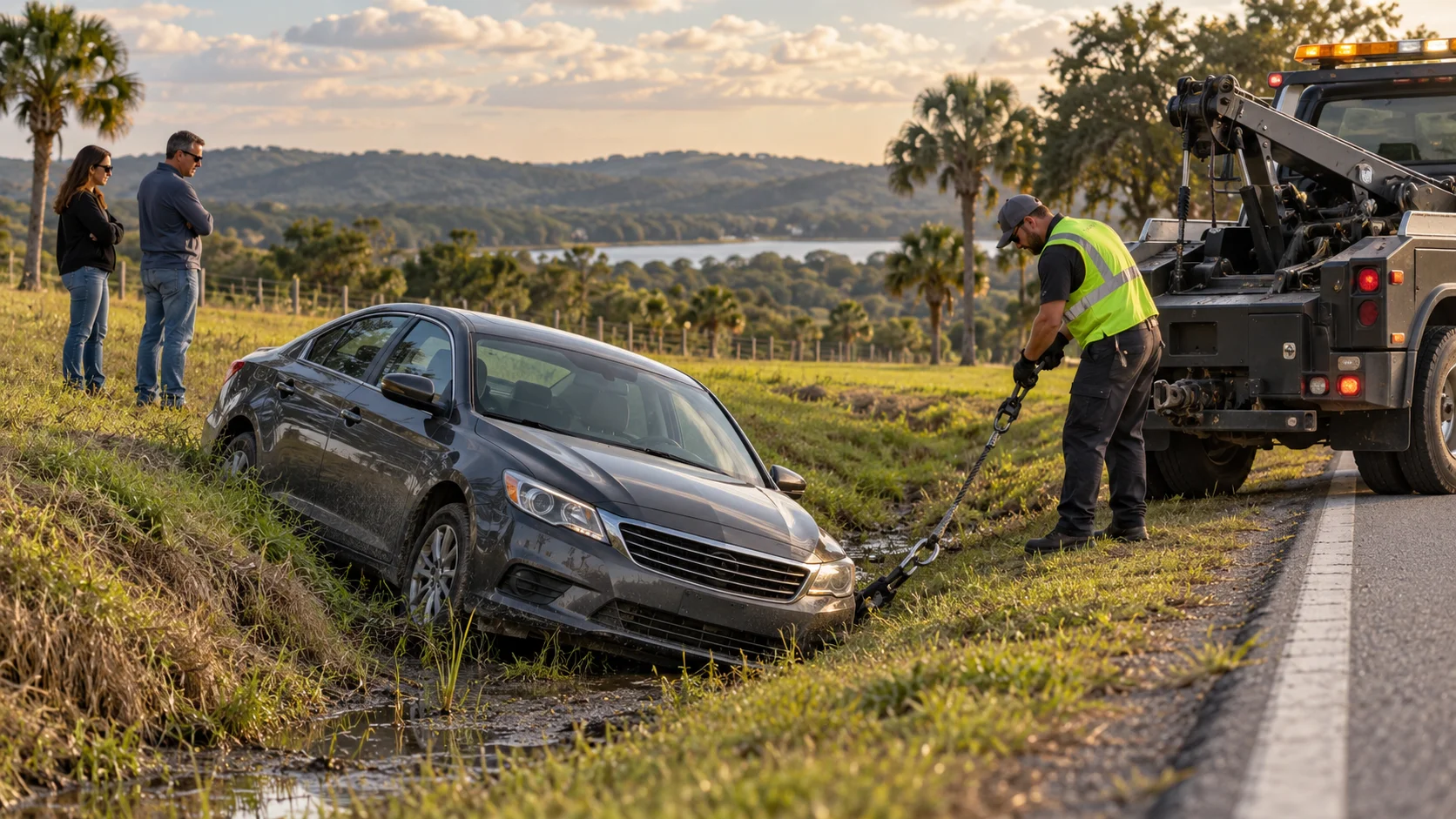
A Clermont ditch recovery starts with an assessment, not an automatic tow-or-winch answer. When a car leaves the pavement near US 27, SR 50, or another Clermont-area road, the operator must inspect its position before choosing a recovery method.
A winch-out may return the vehicle to firm pavement. Towing may follow if the car can’t be driven safely. Some scenes require both, but that decision belongs to the operator at the roadside.
Keep everyone away from moving traffic
Your first concern isn’t the car. It’s keeping everyone away from passing vehicles.
A car off road near US 27 may sit below the shoulder. That doesn’t mean the shoulder is safe. Drivers approaching the scene may not expect people near the pavement. Curves, hills, darkness, rain, and roadside vegetation can also reduce visibility.
If you can leave the vehicle safely, move to firm ground away from traffic. Don’t stand between the car and the road. Avoid the downhill side if the vehicle appears unstable. Keep children and pets close, well beyond the recovery area.
If leaving the vehicle would put you closer to traffic, stay belted inside. Use your hazard lights if they work. Follow instructions from law enforcement or other emergency personnel at the scene.
Don’t walk along a narrow shoulder to inspect the car. You also shouldn’t cross active lanes for a better phone signal or view. A passenger already in a secure location can check FL511 traffic and incident alerts without entering the roadway.
Tell the call taker if anyone is injured or if traffic is immediately threatened. A collision, fire, leaking fluid, or damaged utility equipment may require emergency help before recovery begins.
Once everyone is in a safer position, keep the recovery area clear. The operator needs room to inspect the ditch, approach the vehicle, and plan the pull without bystanders moving around the car.
Stop attempts that could shift the vehicle
A vehicle in a roadside ditch may look close enough to drive out. That appearance can be misleading. Spinning the tires, rocking between gears, or accepting a pull from another vehicle could change its position.
Stop trying if the wheels are digging into soft ground. The same applies if the car leans, slides, or makes new contact with the ditch. Movement can reduce the stable space available for a controlled recovery.
Don’t crawl beneath the vehicle. Don’t place boards, rocks, floor mats, or other objects under the tires. Avoid attaching straps, chains, or ropes to bumpers, suspension parts, or points you can’t identify. This isn’t the place to test a recovery idea.
A roadside ditch differs from a car stuck on a flat, open surface. Clermont’s rolling terrain can leave one side of a vehicle higher than the other. The pavement edge, drainage area, and soft shoulder may also limit safe access.
Leave the steering, gear selection, and braking instructions to the operator. If the operator needs you inside the car during a controlled recovery, you’ll receive clear directions at the scene. Don’t enter or restart the vehicle before that assessment.
Our guide to when a vehicle needs a winch-out explains the broader service. A ditch scene needs extra attention because slope, traffic exposure, and vehicle angle affect the plan.
Stopping early preserves the scene the operator needs to evaluate. It also prevents a simple off-pavement recovery from becoming a harder extraction.
Describe the slope, ground, and vehicle position
Good details help the operator understand the job before arrival. You don’t need measurements or mechanical knowledge. Describe only what you can see from a safe position.
Start with your location and direction of travel. Say whether you’re near US 27, SR 50, an intersection, a business entrance, or another visible landmark. Share a map pin if your phone allows it. Don’t walk toward traffic to read a sign.
Next, describe the ditch in ordinary words. Is the car on a gentle slope or noticeably tilted? Is it facing forward, sideways, or back toward the road? Mention whether all wheels remain on the ground.
Describe the surface as grass, sand, mud, standing water, loose soil, or another visible condition. Don’t step into the ditch to test it. Ground that supports a person may not support recovery equipment or a moving vehicle.
Tell the call taker how far the car appears from firm pavement, but don’t guess a precise distance. Explain whether a guardrail, tree, fence, culvert, sign, or utility pole sits near the vehicle. These details can affect where the operator can work.
Also mention the road edge. A wide, firm shoulder presents a different setup from a narrow shoulder beside moving traffic. The operator will still verify access after reaching the scene.
For a roadside failure that hasn’t left the pavement, see our US 27 Clermont breakdown guide. A ditch recovery needs a different assessment because the vehicle must first return to a stable travel surface.
Share visible wheel and body damage
The recovery plan also depends on the vehicle’s visible condition. Report what you can see without approaching an unsafe side or touching damaged parts.
Mention any wheel that looks turned sharply, folded inward, pushed backward, or separated from the tire. Note a flat tire or a wheel buried in soil. These observations don’t confirm mechanical damage, but they help the operator prepare for the assessment.
Look for body panels resting against the ground. The front bumper, rear bumper, rocker area, or underbody may contact the slope even when the wheels appear clear. Don’t reach beneath the car to check clearance.
Tell the call taker if an airbag deployed, a window broke, or a door won’t open. Mention visible fluid, smoke, sparks, or a fuel smell immediately. Keep people away from the vehicle when those hazards are present.
You should also say whether the engine is running and whether the car can shift. Don’t test either one just to answer. Report only what happened before you stopped attempting to move the vehicle.
Photos can help if they’re taken from firm ground and away from traffic. A wide photo showing the car, slope, and road edge is often more useful than a close view. Never enter the ditch or stand in a live lane for a picture.
Visible damage may turn a winch-out into an accident recovery and towing job. The operator may recover the vehicle to pavement, inspect how it sits, and then determine whether it can be transported safely. That choice shouldn’t be made from appearance alone.
Let the operator choose the recovery plan
“Tow or winch-out” isn’t always an either-or decision. A winch moves a vehicle from an inaccessible position. A tow transports it after recovery when driving isn’t appropriate.
The operator begins by checking the vehicle’s angle, ground conditions, road access, and visible damage. The operator also needs suitable places to position the recovery vehicle and control the car’s movement.
A shallow grassy ditch may still present complications. A wheel can be buried, the body can rest on the ground, or the road edge can limit the approach. A more dramatic-looking position may offer a workable recovery path. Only an on-scene assessment can settle that difference.
The operator may choose a controlled winch-out, another recovery setup, or a recovery followed by towing. The vehicle’s drivetrain, wheel condition, steering position, and body contact can affect transport after it reaches pavement.
Don’t pressure the operator to pull from a specific direction. Don’t request attachment to a convenient-looking body part. Recovery points and pulling angles must be selected for the actual vehicle and scene.
If the car can’t continue after extraction, emergency towing can move it from the roadside. Quick Tow Orlando connects drivers with independent towing and roadside operators serving the Orlando Metro area. The pros in the network are licensed and insured.
Ask the operator to explain the plan before recovery begins. Confirm where the vehicle will go if towing follows. You can also share any access concern, passenger need, or vehicle detail that wasn’t clear during the first call.
When to call us
Call when the vehicle has left firm pavement, sits at an angle, or shows possible wheel or body damage. Don’t attempt a roadside ditch pull yourself when an operator can assess the slope, traffic exposure, and vehicle position.
The Quick Tow Orlando request line is open 24/7. Call us at (321) 321-9797.