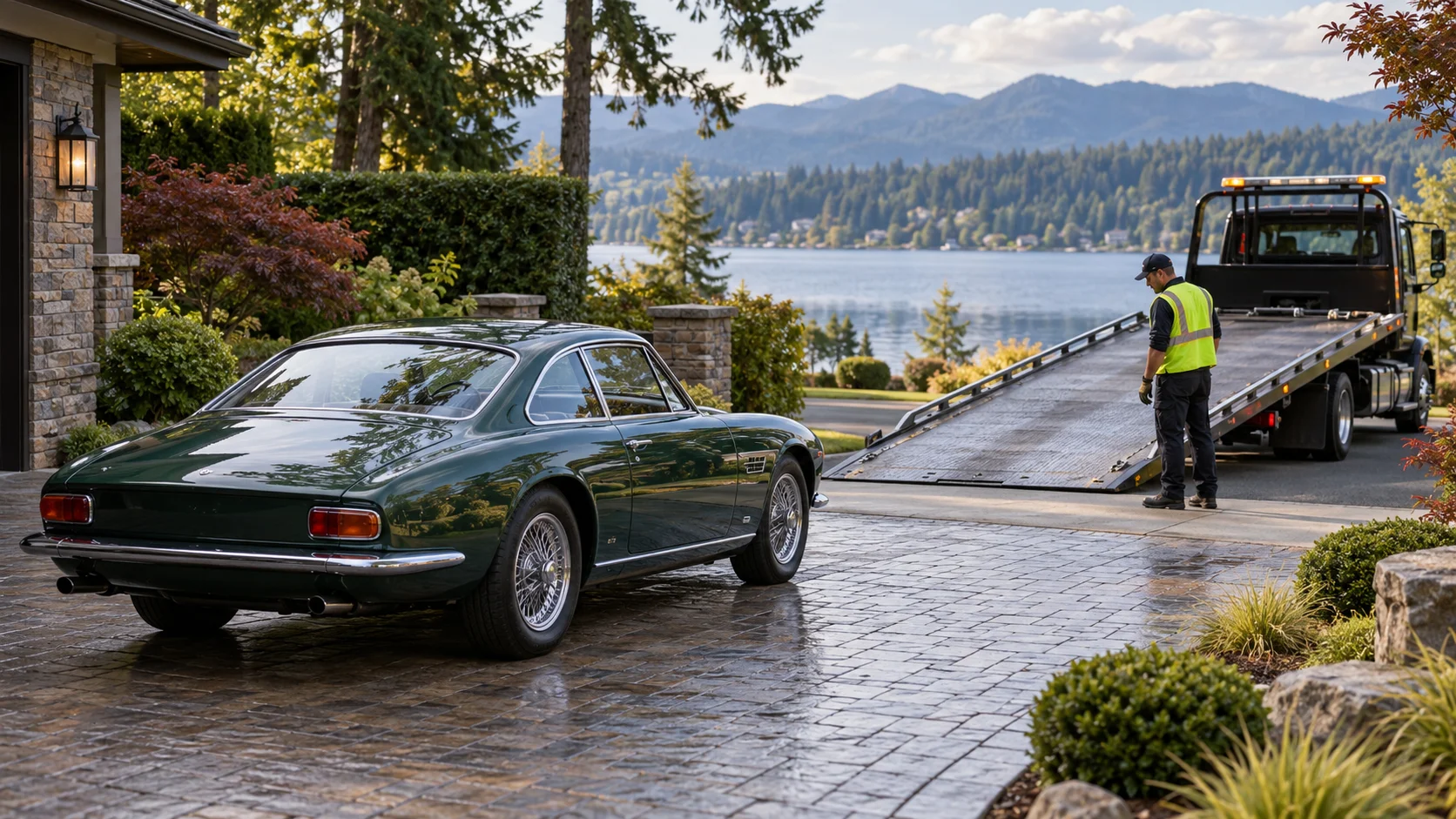
A collector car that won’t start in a Windermere driveway needs a planned pickup. Before anyone moves it, identify the car’s condition, available clearance, loading path, and receiving destination.
That preparation matters more than another turn of the key. It gives the referred operator enough detail to choose an appropriate approach.
Stop repeated starting attempts when something seems wrong
One failed start doesn’t explain the underlying problem. The battery may be weak, the car may be out of fuel, or a mechanical issue may be present. Don’t keep trying when the vehicle behaves differently than normal.
Stop immediately if you notice smoke, a fuel smell, leaking fluid, unusual heat, or an unfamiliar mechanical sound. Keep people away from the affected area. Don’t crawl beneath the car or touch a hot component.
A jump start also isn’t automatically the right next step. Classic and exotic vehicles can have model-specific electrical requirements. Some have modified wiring, battery cutoffs, aftermarket ignition systems, or restoration work that isn’t obvious from outside.
Check the owner’s manual and any current guidance available for that vehicle. If a marque specialist maintains the car, ask that shop before connecting outside power. Tell the referred operator what happened during the final starting attempt.
Useful details include:
- Whether the engine cranks, clicks, or stays silent
- Whether dashboard lights appear
- Any warning lights or unusual gauge readings
- The location and condition of the battery
- Any smoke, odor, heat, or visible fluid
- Recent repairs, storage, or electrical work
- Whether the steering, brakes, and transmission respond normally
Don’t present a guess as a diagnosis. A simple description is more useful. For example, say, “The lights came on, but the engine didn’t crank.” That gives the operator a clear starting point.
If the car needs transport instead of roadside service, request exotic and classic vehicle towing. Quick Tow Orlando connects Windermere owners with independent local operators. The brand doesn’t perform the towing itself.
Describe the car and its current condition
“Classic coupe” isn’t enough information for a driveway pickup. The operator needs a precise description before arriving.
Share the year, make, model, transmission type, and any known modifications. Mention whether the car has factory bodywork, a lowered suspension, side-exit exhaust, long overhangs, or an aftermarket front splitter. If you can’t confirm a specification, say so.
Current condition matters just as much. Tell the operator whether the car rolls, steers, brakes, and shifts into neutral. Don’t force the shifter or release a parking brake against the vehicle’s documented guidance. Ask the operator how they want the car left before loading.
Keys should be available even when the engine won’t start. Mention a missing key, locked steering, security system, battery cutoff, or electronic parking brake during the first call. Those details can change how the operator prepares.
Also disclose damage before pickup. Point out a flat tire, seized wheel, loose body panel, broken suspension part, or leaking system. Don’t assume a non-running classic can roll because it moved during its last drive.
Photos can help explain the situation. Capture the entire car and close views of anything unusual. A wider driveway photo can show the approach from the street. Don’t rely on a photo alone when a hazard needs a direct explanation.
If you’re comparing possible transport methods, read our broader guide to classic car towing in Orlando. For this Windermere pickup, the immediate question is narrower: what condition is the car in right now, and how can the operator reach it?
Clear information helps the operator evaluate the job before the vehicle is touched.
Check driveway access and ground clearance
A Windermere driveway pickup starts with the path between the car and street. Walk that path before calling. Look for anything that limits truck access or changes the loading angle.
Check the gate opening, parked vehicles, landscaping, low branches, tight turns, and overhead obstructions. Move ordinary obstacles when doing so won’t damage the property. Don’t trim landscaping, dismantle a gate, or alter the driveway just to create access.
Tell the operator where the car sits. It may face toward the street, into a garage, beside another vehicle, or around a bend. Mention whether the truck can approach in a straight line. If you’re uncertain, send clear photos from several positions.
Ground clearance needs its own review. Look beneath the front bumper, side skirts, exhaust, differential, and rear bodywork without crawling under the vehicle. Identify the lowest visible point and tell the operator about it.
The transition from the driveway to the road also matters. Photograph the slope from the side. Include any curb, drainage edge, pavers, gravel, soft ground, or sharp change in grade. Don’t invent a clearance measurement if you haven’t measured it accurately.
Keep the route open before the operator arrives. Remove movable planters, hoses, toys, and other loose items. Keep pets and bystanders away from the loading area.
A flatbed may be considered for a non-running collector car, but the vehicle’s condition and access determine the actual method. Our flatbed towing service guide explains that option. Owners of lowered vehicles can also review the low-clearance car towing guide before describing the approach.
Don’t request a specific loading technique based only on appearance. Share the facts, the vehicle guidance, and the driveway conditions. Let the operator evaluate the pickup.
Document the vehicle before loading
Create a simple condition record while the car remains parked. This protects clarity for everyone involved. It also helps the receiving shop understand what existed before transport.
Start with wide photos of every side. Then photograph the roof, glass, wheels, bumpers, lower bodywork, and cabin. Capture existing scratches, cracks, dents, loose trim, and damaged wheels at close range.
Use good natural light when possible. Don’t apply wax, tire dressing, or another product simply to improve the pictures. The goal is an accurate record, not a presentation photo.
Include the pickup setting. Take images showing the car’s position in the driveway, its distance from nearby objects, and the route toward the street. If access is tight, photograph the limiting point from both directions.
Remove personal property that isn’t needed at the destination. Secure only those vehicle items that can be handled according to current manufacturer or restoration guidance. Don’t tape over paint, tie down a loose panel, or disconnect a component unless qualified guidance supports it.
Before loading begins, walk around the car with the operator. Point out known damage and unusual controls. Share any written instructions from the owner’s manual, restoration shop, or current vehicle guidance.
Ask where attachment or loading contact may occur. Don’t assume a visible frame section is an approved connection point. Collector vehicles may have restoration work or nonstandard components that aren’t apparent from above.
Keep your photos and service paperwork together. Record the destination and the name of the person authorized to receive the car. If someone else owns the vehicle, make sure the operator knows who can approve the move.
Documentation shouldn’t delay an urgent response to smoke, leaking fuel, or another immediate hazard. In an ordinary driveway pickup, however, a careful record takes little effort and avoids confusion later.
Choose a destination that can receive it
Pick the destination before the car leaves the driveway. A repair shop isn’t useful if it can’t accept the vehicle, handle its condition, or provide a suitable unloading area.
Call the shop first. Confirm that it works on the vehicle’s year, make, model, or installed systems. Explain that the car doesn’t run and will arrive by tow operator. Ask where the vehicle should be unloaded.
Don’t assume a general repair shop handles classic, exotic, or restored vehicles. Some owners prefer a marque specialist, restoration facility, storage location, or trusted mechanic. The right choice depends on the vehicle and the suspected problem.
Confirm these details with the recipient:
- The correct street address and entrance
- The receiving contact’s name
- Whether the facility will be open
- Where a non-running car should be placed
- Whether the facility can accept the chosen transport method
- What keys, records, or authorization it needs
If the car is moving to private storage, verify that someone can provide access. Tell the operator about gates, indoor placement, narrow approaches, or surface restrictions at the destination. Loading is only half the move. Unloading needs enough planning too.
Don’t send the car to an unattended address without agreement from the recipient and operator. A locked gate or full lot can leave the vehicle without an approved handoff point.
Share the destination before the operator starts toward Windermere. Mention any restrictions provided by the receiving facility. If the shop gives model-specific handling directions, pass them along without changing the wording.
Quick Tow Orlando can connect callers across the Orlando Metro with independent operators. The request line is open 24/7. The operator can discuss the pickup facts, but the owner and receiving facility should settle where the vehicle belongs.
When to call us
Call when the classic won’t start, shouldn’t be restarted, or needs a planned driveway pickup. We’ll take the details and connect you with a local operator who can evaluate the vehicle, access, and destination. Call us at (321) 321-9797.