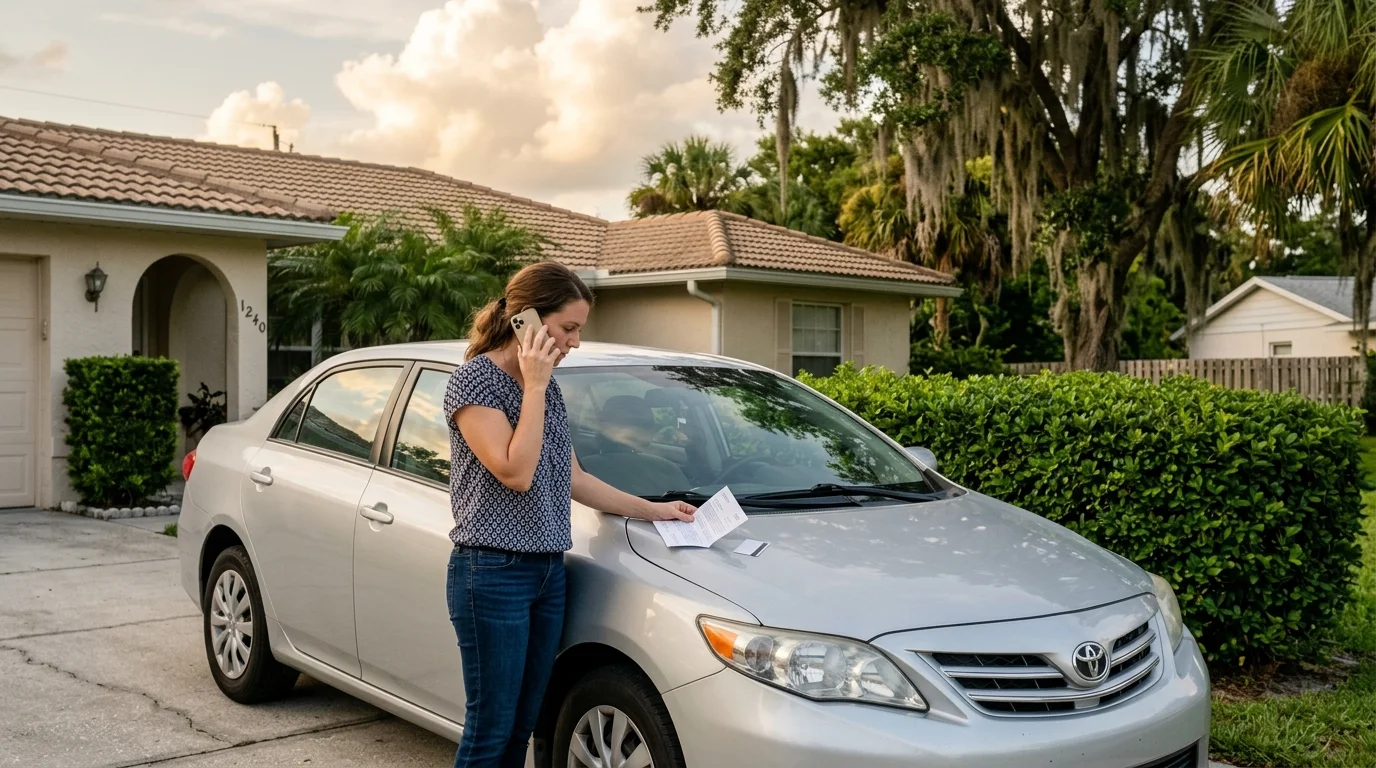
Does insurance cover towing in Florida? Only if your policy pays for it. Florida’s required coverages, personal injury protection and property damage liability, do not include towing. Towing is covered when you carry a roadside-assistance endorsement, or, after a crash, when your collision coverage picks up the tow and storage. Full coverage on its own does not guarantee it.
That is the whole answer, and the rest of this guide shows you where to look in your own policy, what to ask the carrier, and who pays the tow operator while that gets sorted out.
Does full coverage car insurance cover towing?
Towing coverage usually comes from one of two places. Your policy may include an optional roadside-assistance endorsement. After an accident, towing and storage may instead fall under collision coverage.
Both possibilities depend on your carrier and policy. Neither comes automatically from Florida’s minimum insurance requirements.
That distinction catches drivers during stressful moments. A car may be disabled on I-4, SR 408, or International Drive. The driver knows the insurance policy is active. That doesn’t answer whether the tow is covered.
Don’t rely on the insurance card alone. Check the declarations page, endorsements, and coverage terms. Look for wording about roadside assistance, towing, labor, collision, or storage. If the wording isn’t clear, call the carrier before authorizing service when conditions allow.
Ask three separate questions:
- Is this type of towing covered?
- Does the insurer choose the operator?
- Who pays the operator when the car is moved?
Those answers may differ even within one policy. Coverage for a mechanical breakdown doesn’t confirm coverage for an accident tow. Accident coverage doesn’t establish that a private-property impound will be paid.
The tow charge and the insurance benefit are separate issues. Our guide to Orlando towing costs explains what to ask the operator. Your policy documents and insurer determine what may be reimbursed.
What Florida actually forces you to carry
Florida’s required insurance coverage focuses on injuries and property damage. It doesn’t create a required towing benefit.
Florida Statute 627.736 requires personal injury protection, commonly called PIP. The required benefits include $10,000 for medical and disability benefits and $5,000 for death benefits. The statute contains no towing, roadside-assistance, or vehicle-transport coverage.
The transportation language in that statute concerns ambulance and emergency medical transport. It applies to an injured person, not the damaged vehicle.
PIP is still Florida law. However, having PIP doesn’t mean an insurer must pay to move your car from SR 417, Lake Nona, or a repair shop.
Florida Statute 324.022 also requires $10,000 in property damage liability. That statute doesn’t mention towing. Florida doesn’t require bodily injury liability coverage at all.
These requirements explain why an active Florida policy may still lack towing coverage. The legal minimum and the protection you selected aren’t the same thing.
No Florida statute compels an insurer to offer or include towing coverage. A carrier may sell roadside assistance as an option. A policy may also address towing and storage through collision coverage after an accident. The details remain carrier and policy specific.
You can use Florida Highway Safety and Motor Vehicles to check current state motor vehicle information. For towing benefits, review the actual policy or ask the insurer directly.
So where does towing coverage come from
Start by looking for an optional roadside-assistance endorsement. This is the policy feature most likely to address a routine breakdown tow.
Don’t stop after finding the words “roadside assistance.” Ask what the endorsement actually covers. Confirm whether your situation qualifies and whether there are distance, destination, or service restrictions. Also ask whether the insurer arranges the operator or expects you to pay first.
After a crash, the answer may come from collision coverage instead. Towing and storage can be bundled into collision coverage, depending on the policy. Ask whether that applies to your specific claim before assuming the bill will be paid.
Keep these coverage paths separate:
- PIP concerns medical, disability, and death benefits.
- Property damage liability doesn’t create a towing benefit.
- Roadside assistance may address a breakdown tow.
- Collision coverage may address towing and storage after an accident.
A roadside problem doesn’t always require a full tow. On an Orlando-area highway, FHP Road Rangers may provide a tire change using the vehicle’s spare, fuel, a jump start, radiator water, minor repairs, or lane clearing. The service is free.
Road Rangers may relocate a disabled vehicle from a travel lane. They don’t tow vehicles away. If a tow is needed, FHP calls a private operator at the motorist’s expense.
That roadside help doesn’t establish insurance coverage. It may simply resolve the immediate problem without vehicle transport. When the car still can’t be driven, ask the insurer and operator separate questions before proceeding.
After a crash the bill splits somewhere else entirely
An accident can create several expenses at once. Medical care, vehicle damage, towing, and storage aren’t automatically handled under one coverage.
PIP addresses the injured person within its statutory limits. It doesn’t pay for vehicle towing. If your policy includes collision coverage, towing and storage may be handled there after an accident. The carrier’s terms decide whether that applies.
When speaking with the insurer, describe the event precisely. Say whether the car was in a collision, where it is now, and who requested the tow. Ask whether the policy covers transport from the crash scene, storage at the current yard, and movement to a repair facility.
If the vehicle needs physical recovery after a collision, see our accident recovery and winch-out service. Quick Tow Orlando connects callers with local operators who handle that work. Coverage still needs confirmation from the insurer.
Local towing rules and insurance rules answer different questions. Inside Orlando city limits, City of Orlando Chapter 39 governs maximum rates for covered nonconsensual towing situations. Orange County Chapter 35 applies in unincorporated Orange County and certain municipalities without their own schedule.
Those local maximums don’t determine what an insurance company owes. They also aren’t blanket rate caps for a consensual tow requested by the vehicle owner. The pickup location and circumstances matter.
The Orange County towing information page explains county rules and vehicle-location steps. If your car disappeared from a parking lot, start with our guide to finding a towed car in Orlando. Then ask your insurer whether any part of that specific tow is covered.
Four questions for your agent, in plain words
A broad question like “Does my insurance cover towing?” can produce an incomplete answer. Give your agent the situation, then ask these four questions.
-
Do I have roadside assistance?
Ask for the exact endorsement name. Describe what happened, such as a breakdown, dead battery, flat tire, or disabled vehicle. Confirm whether towing is included for that event and whether the destination matters.
-
How does accident towing work under my collision coverage?
Ask whether collision coverage applies to towing from the scene. Then ask about storage and transport to a repair facility. Confirm whether any deductible, approval, or documentation requirement applies.
-
Who chooses and pays the operator?
Ask whether the insurer must arrange the tow. If you choose an operator, confirm whether the carrier pays directly or reviews the invoice later. Don’t assume that having coverage means no payment is due when the vehicle moves.
-
What situations aren’t covered?
Name the exact scenario. Ask about mechanical breakdowns, private-property removals, police-requested tows, long-distance transport, and repeated service calls. These questions help uncover exclusions without guessing what the policy says.
Write down the answers. Ask where the relevant terms appear in your policy. If the explanation remains unclear, request written confirmation through the carrier’s normal communication channel.
Before approving a tow, ask the operator where the vehicle will go. Request the total being stated before the operator is sent, along with the payment process. Then keep the invoice and any claim instructions your insurer provides.
Florida’s minimum coverage can’t answer these policy questions. Only your insurance documents and carrier can confirm whether the specific tow is covered.
When to call us
A tow operator is worth calling when your car can’t be driven after a crash or roadside problem. Quick Tow Orlando takes calls at any hour, dispatches Monday to Friday from 8 a.m. to 10 p.m., and connects callers with a local operator suited to the situation. Call us at (321) 321-9797.