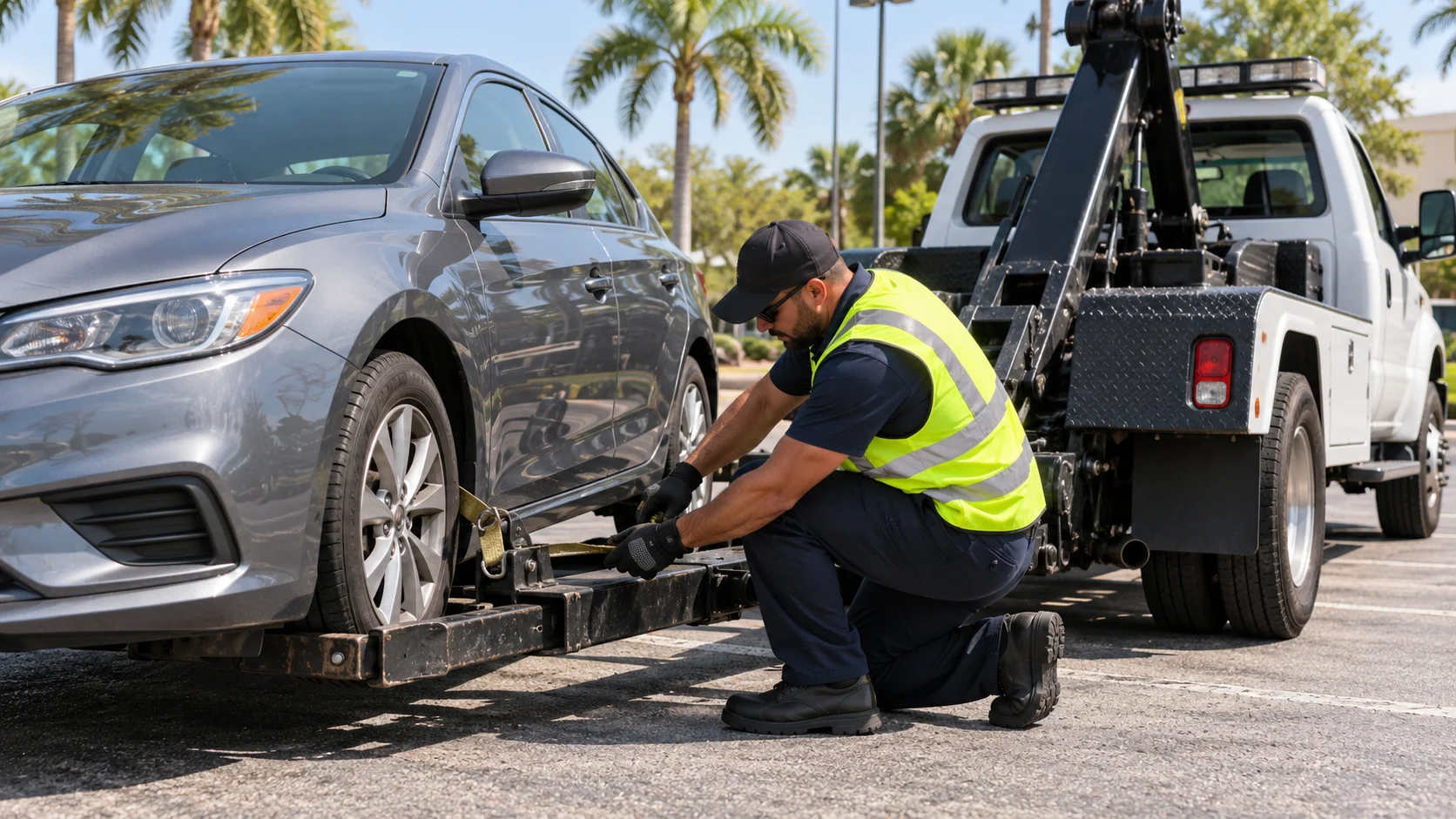
A front-wheel-drive car may be suitable for wheel-lift towing. However, drivetrain alone doesn’t approve a specific setup. The operator must check the exact vehicle, its current condition, manufacturer guidance, and available loading space.
That distinction matters when you’re stranded near I-4, SR 408, or International Drive. A quick drivetrain guess can leave out damaged wheels, locked steering, low clearance, or model-specific instructions.
Confirm the drivetrain before choosing equipment
Start by confirming that the car is actually front-wheel drive. Don’t rely on its body style, badge position, or appearance. The same model line may have different configurations, and a previous owner’s description may be wrong.
Check the owner’s manual or the manufacturer’s current towing instructions. You can also provide the vehicle identification details when requesting help. Give the operator the year, make, model, and trim if known. That information helps the operator check the correct vehicle instead of a similar version.
Tell the request line if the car is hybrid or electric. Mention any drivetrain warning shown on the dashboard. A modified suspension, changed wheel size, or aftermarket bodywork may also affect loading access.
Don’t confuse roadside towing with pulling a car behind an RV. Flat towing, tow dollies, wheel-lift recovery, and transport on a flatbed aren’t interchangeable terms. Each setup places the vehicle differently and may follow different manufacturer instructions.
Front-wheel drive also shouldn’t be treated like all-wheel drive. The loading question is different because the vehicle’s exact configuration matters. Our guide to wheel-lifting an AWD vehicle addresses that separate concern.
If you can’t confirm the drivetrain, say so. Quick Tow Orlando can pass the uncertainty to an independent local operator. The operator can then inspect the vehicle before choosing equipment. An honest “I’m not sure” is more useful than a confident guess.
Explain how the lifted wheels affect the decision
A wheel-lift raises one end of a vehicle while the other end remains supported differently. The important question isn’t simply whether a car is front-wheel drive. It’s whether the planned position matches the current manufacturer guidance for that exact car.
Ask which end of the vehicle would be raised. Then ask what will happen with the wheels that aren’t held by the lift. The operator may need more information before confirming the setup.
Avoid giving the car a manual push or pull test. A vehicle that rolls slightly in a parking space still may not be ready for towing. Its transmission position, parking brake, steering, electronic controls, and damaged parts all require attention.
The operator also needs to know whether the car can enter neutral. Report if the key is missing, the battery is dead, or the shifter won’t move. Don’t force the controls or drag the vehicle to make it easier to reach.
Our wheel-lift towing service page explains how to request this type of connection. For a broader equipment comparison, read wheel-lift versus flatbed towing.
There isn’t one approved wheel-lift position for every front-wheel-drive car. Model guidance may differ, and the vehicle’s condition can change the decision. Let the operator identify the lifting points, support plan, and loading direction after seeing the car.
That approach keeps the answer practical: yes, a wheel-lift may work, but only after the full setup is confirmed.
Check the vehicle’s current towing guidance
Use the newest guidance available for the exact vehicle. The owner’s manual is a useful starting point, but confirm that it matches the correct model year and configuration. A manual for a neighboring year may describe a different procedure.
Look for the section covering emergency towing, vehicle transport, or roadside recovery. Read the entire procedure, including warnings and preparation steps. Don’t stop after finding one sentence that mentions a tow truck.
If the manual isn’t in the glove box, check the manufacturer’s official owner-support materials. A dealership service department may also help identify the applicable guidance. Tell them the precise model, trim, and drivetrain rather than asking about the brand generally.
Share any towing instruction you find with the connected operator. If the dashboard or infotainment system provides a transport setting, don’t activate it based on an unrelated online video. Ask the operator to confirm whether that setting applies to the planned loading method.
The guidance may not settle every roadside issue. A manual can describe normal recovery while your car has collision damage, a broken wheel, or parts touching the pavement. That’s why manufacturer instructions and an on-site inspection work together.
If you can’t locate reliable guidance, don’t invent a rule. Tell the request line that the procedure couldn’t be confirmed. The operator can consider another loading plan after inspecting the vehicle.
A flatbed towing connection may be considered when the operator or current vehicle guidance rules out the proposed wheel-lift setup. That isn’t a universal instruction that every front-wheel-drive car needs a flatbed. It’s an equipment decision tied to the specific car and scene.
Describe damage and access before dispatch
A front-wheel-drive label doesn’t describe what happened to the car. The operator needs the breakdown details and the vehicle’s position before confirming a wheel-lift plan.
Describe every wheel that appears damaged. Mention a flat tire, bent wheel, broken suspension part, loose panel, or fluid beneath the vehicle. Say whether anything is touching the road. Don’t crawl beneath the car to investigate.
Report whether the vehicle rolls, steers, and shifts normally, but only from what you already know. Don’t test damaged controls or move the car through traffic. If the steering is locked or a wheel points at an unusual angle, include that detail.
Access can matter as much as damage. A car parked nose-in against a wall presents a different scene from one sitting in an open lot. Tell the request line about parking-garage clearance, narrow entrances, ramps, curbs, gates, and nearby vehicles.
Orlando-area locations can create very different loading conditions. A garage in Downtown Orlando won’t offer the same space as an open lot near Lake Nona. A shoulder along SR 417 also requires a different scene assessment from a Winter Park driveway.
Give a clear location and travel direction. Include the nearest safe landmark when useful. If you’re beside moving traffic, stay away from active lanes and wait in the safest available place.
Photos may help an operator understand visible damage and access. Take them only from a safe position. Useful views show the whole vehicle, damaged wheels, surrounding space, and any low-clearance obstacle. Avoid standing behind the car or stepping into traffic for a better angle.
Let the operator confirm the loading plan
The final plan belongs to the operator who can inspect the vehicle and scene. That person can compare the manufacturer’s guidance with the car’s actual condition. They can also decide whether the available approach leaves enough room for the proposed equipment.
Before loading begins, repeat the key facts. Confirm the year, make, model, drivetrain, and known damage. Point out any warning lights, unusual noises, missing keys, locked controls, or recent mechanical work.
Ask the operator to explain which end will be lifted and how the other wheels will be handled. If the plan differs from the guidance you found, ask why. The answer may involve visible damage, access, or a detail that wasn’t clear during the call.
Remove loose personal items if you can do so safely. Keep the key available when you have it. Don’t attach straps, release controls, or position equipment unless the operator directs you.
Quick Tow Orlando connects drivers across the Orlando Metro with independent towing and roadside operators. The request line is open 24/7. We collect the vehicle and scene details, then pass them to a local operator who can confirm the equipment choice.
That process matters because “front-wheel drive” is only one part of the job. A usable loading plan must also account for the exact vehicle, current guidance, damaged components, and physical access. A wheel-lift may be appropriate, or the operator may recommend a different approach after inspection.
When to call us
Call when the car’s towing guidance is unclear, a wheel is damaged, or the loading space is restricted. Quick Tow Orlando can connect you with an independent local operator who will confirm the setup. Call us at (321) 321-9797.