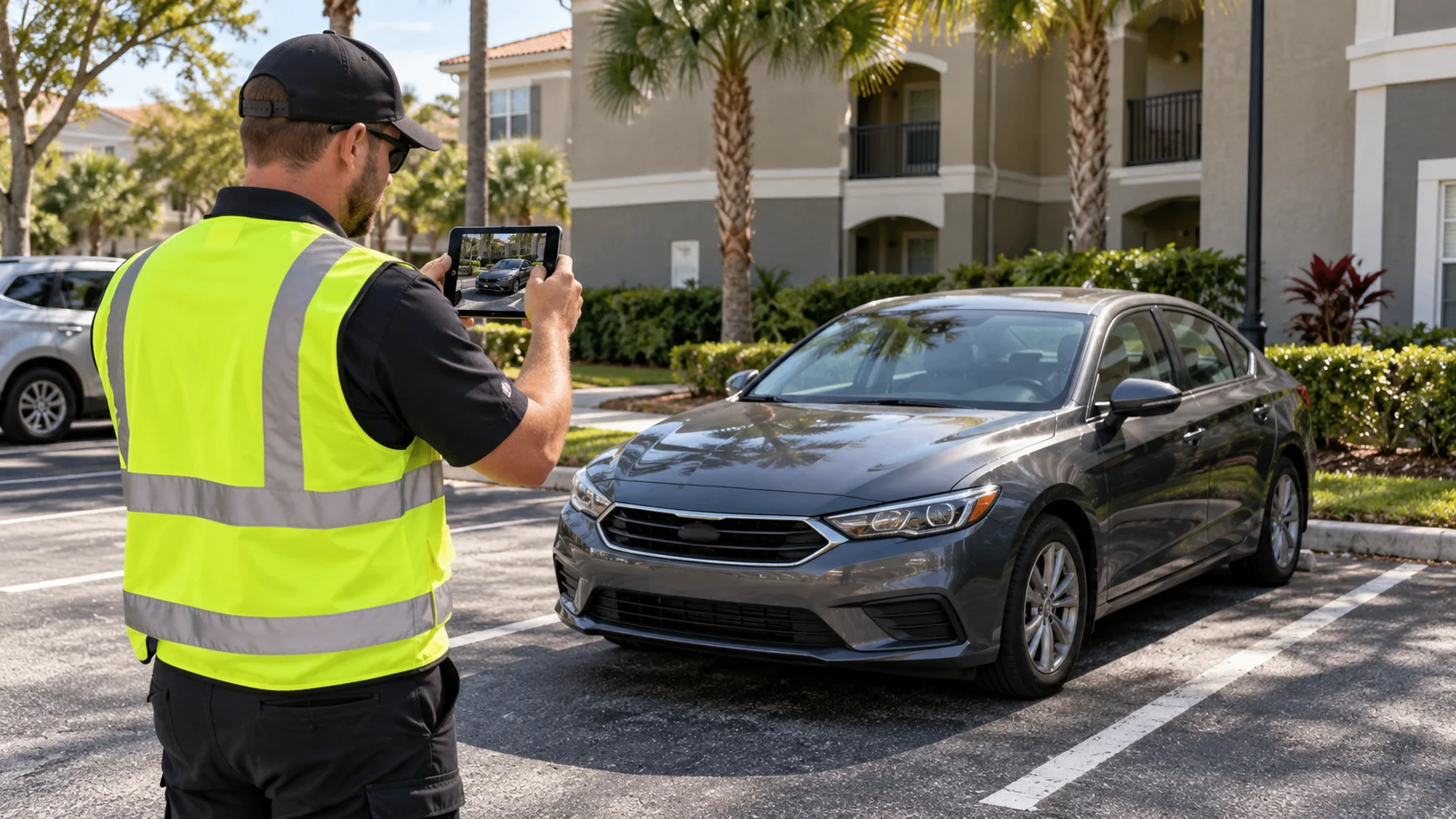
A missing parking permit can place a car at risk in an apartment lot. Whether a tow was proper depends on the property rules, posted notices, parking space, authorization, and current Florida requirements. Don’t assume every missing sticker makes a vehicle immediately towable.
Apartment towing without a parking permit is also different from towing for expired registration. It isn’t the same as parking in another resident’s assigned space. Work through each issue separately before deciding what happened.
Start with the property and parking space
Begin with the exact place where the vehicle was parked. Apartment parking lots are private property, but every space may not follow the same rules. A complex can have resident spaces, assigned spaces, visitor areas, loading zones, and restricted access lanes.
Write down the building number and nearest space marker. Note whether the space had a reserved label, unit number, or other marking. Photograph the view a driver would have while entering that section of the lot.
A missing permit may be only one part of the dispute. For example, a valid resident permit might not resolve parking in someone else’s assigned space. A visitor permit might apply only in a marked guest area. An expired vehicle registration is another issue and shouldn’t be treated as proof of a permit violation.
If another car is occupying your assigned space, start with property management. Show them your lease language and any space assignment. Don’t arrange a removal yourself unless management confirms the proper process and authority. Our guide to a car in an assigned Orlando parking space explains how to document that situation.
Location also affects which local rules need checking. An apartment with an Orlando mailing address isn’t enough to identify the governing local authority. Confirm whether the property sits inside city limits or in unincorporated Orange County. Don’t rely on a neighborhood name, ZIP code, or leasing advertisement.
The first question isn’t simply whether the windshield had a sticker. It’s whether that vehicle, in that specific space, violated a current rule that applied there.
Check the current permit and guest rules
Read the parking section of your lease and every later parking addendum. Apartment policies can change during a tenancy, so compare the documents with any current notice management provided. Keep copies of emails, portal messages, and permit instructions.
Look for details about the vehicle and the permit itself:
- Which vehicles are registered to the unit
- Where the permit must be displayed
- Whether permits have expiration dates
- Which spaces residents may use
- How guest vehicles are registered
- Whether temporary or replacement permits exist
- What happens when a vehicle or license plate changes
These are document checks, not universal Florida rules. The approved sources don’t confirm one statewide apartment permit policy. They also don’t establish that every complex must give a separate warning before every permit-related tow. If your lease is silent or unclear, ask management for the current written policy.
Guest parking needs special attention. A visitor may have permission from a resident but still lack whatever registration the property requires. The reverse can also happen. A displayed guest permit doesn’t necessarily answer whether the car used the correct area or stayed within the property’s stated conditions. Our guide to an apartment guest car tow in Florida covers that separate situation.
If the permit fell from the windshield or became unreadable, photograph where it was found. Save any registration confirmation from the property’s portal. Those records may help explain the situation, but don’t assume they automatically invalidate a tow.
Ask management to identify the exact rule it believes the vehicle violated. Request the version in effect on the tow date. That keeps the conversation focused on documents instead of conflicting memories.
Confirm who authorized the removal
Ask property management whether it requested or approved the vehicle’s removal. Get the towing operator’s name from the posted information, management, or the paperwork provided at release. Record the date and approximate time you discovered the car missing.
Don’t assume a neighbor, resident, or maintenance worker had authority to order a tow. The approved sources don’t confirm a universal authorization form for every Florida apartment removal. The safest step is to request the authorization record and compare it with the current version of Florida Statute 715.07.
That statute governs towing from private property without the vehicle owner’s consent. It includes notice standards and exceptions. The required signs generally include “tow-away zone” text, the towing company’s name, and its current telephone number. They must use reflective lettering on a contrasting background and meet specified placement and installation requirements.
The statute also contains exceptions, including single-family residences and situations involving personal notice. An apartment dispute should be evaluated using the facts at that property. Don’t apply an exception without confirming that it fits.
If you manage an apartment property and need a vehicle removed, use the property’s established authorization process. Confirm the space, vehicle, posted information, and current written policy first. A private property towing referral can connect an authorized property representative with an independent local operator.
For a resident, authorization records help answer a narrow question: who initiated the removal, and what documented violation did that person identify? Keep that separate from whether the permit rule was clear or the signs met current requirements.
Document signs and vehicle details
Take wide photographs before focusing on individual signs. Capture each driveway used to enter the apartment lot. Then photograph the route from that entrance to the parking space. This shows whether posted information was visible along the actual approach.
Florida’s verified private property towing rules specify sign features and placement. Unless an exception applies, notices must be placed at each driveway access point within 10 feet of the road, or at the required intervals along lot frontage. Signs must be permanently installed between 3 and 6 feet above ground. They must also be maintained for at least 24 hours before towing begins.
Those measurements matter, but don’t estimate them from a distant photograph. If a measurement becomes important, document it carefully. Review our explanation of Florida private property towing sign requirements before deciding which details need closer inspection.
Photograph the vehicle from every side after retrieval. Include the wheels, bumpers, doors, windshield, permit area, and visible preexisting damage. Save the tow receipt and every page provided by the storage facility. Don’t leave personal information visible when sharing images publicly.
Write a short timeline while events are fresh. Include when the car was parked, when the permit was last seen, when the vehicle disappeared, and when management was contacted. Save screenshots of any permit registration or guest approval.
If the car is still at the storage facility, Florida’s verified rules allow the owner to inspect it before accepting it. The operator can’t require a “no release or waiver” clause as a condition of redemption. Vehicle owners must also be allowed to inspect and retrieve personal property within one hour after presenting appropriate documentation during business hours.
Good documentation won’t decide the dispute by itself. It creates a clear record for management, the towing operator, a consumer agency, or an attorney.
Verify the current Florida process
Use current official information before challenging the tow or paying a disputed charge. Florida rules, local procedures, and apartment policies answer different questions. One source rarely answers the entire permit dispute.
Florida’s private property towing statute says a vehicle must be released within one hour of the owner’s request. Orange County publishes additional towing information for properties under its authority. For a Class A private property trespass tow, the county lists a $135 flat towing rate and $32 storage charge per 24-hour increment. It also states that a vehicle must be released within 30 minutes of payment.
Check the current Orange County towing information before relying on those figures. Confirm that the apartment falls under the county rules shown there. Specific City of Orlando maximum towing rates couldn’t be confirmed from the approved research, so don’t assume the county rate applies inside city limits. Ask the relevant local government for its current official schedule.
Storage can’t be assessed when a vehicle is held for fewer than six hours under Florida’s verified lien law. Ask for an itemized receipt and compare each listed charge with the current rules for the property’s jurisdiction.
If something appears wrong, first speak with the towing business manager or owner. Orange County Consumer Protection accepts and investigates towing complaints. It can review complaints, request business responses, make referrals, and conduct compliance visits. It can’t provide legal advice, represent a consumer, or order a particular resolution.
Our guide to rights after an Orlando tow explains the records worth keeping. For legal advice about a disputed removal, contact a qualified Florida attorney.
When to call us
Call when an authorized apartment representative needs help arranging a private property tow, or when you need a separate tow after retrieving your vehicle. Quick Tow Orlando takes calls 24/7 and connects customers with independent local operators serving the Orlando Metro. Call us at (321) 321-9797.