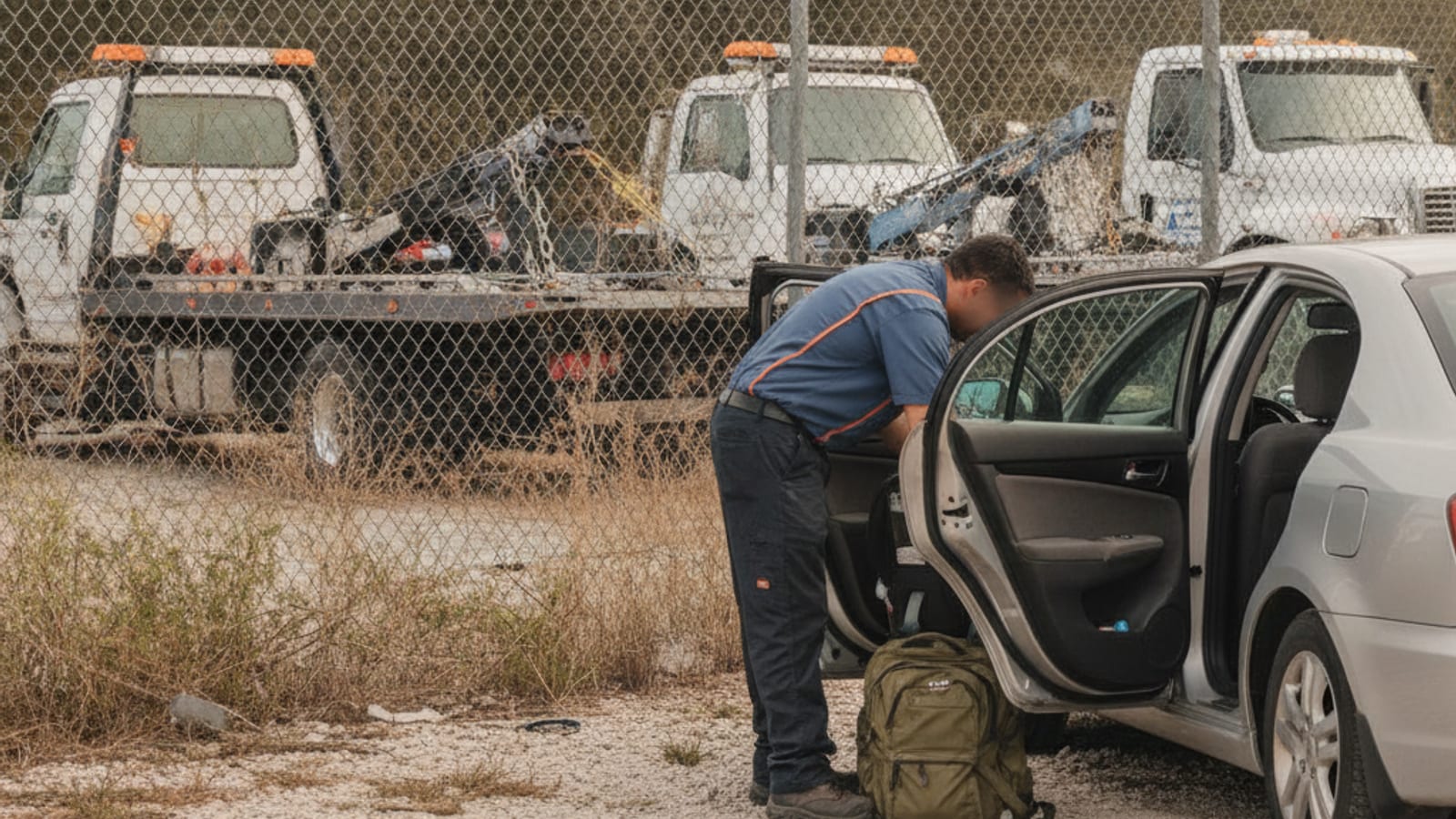
No. Under Orange County’s towing ordinance, a tow company can’t hold your personal belongings hostage in a towed car. You have the right to inspect the vehicle and pull your things out at the storage facility at any time, without paying the tow or storage bill first and without signing any release or liability waiver. That protection comes from a county rule, Orange County Code Section 35-56(m), not from Florida’s state towing statute, and knowing the difference matters if a yard employee tells you otherwise.
What the county ordinance actually guarantees
Orange County Code Section 35-56(m) is specific about this. Once your car is at the storage lot, you can walk in and ask to inspect it. You can pull out anything that’s yours: your phone, your wallet, a car seat, work equipment, whatever you left inside. The yard can’t require payment first. It can’t hand you a release form or a liability waiver and make signing it a condition of getting your belongings back. And it can’t tell you to come back during specific hours, because the ordinance grants this right at any time, not just during a posted business window.
Why Florida state law doesn’t cover this
Florida’s private-property towing statute, Section 715.07, sets the rules for signage, notice, and how a tow company has to notify police after removing a car. It says nothing about personal belongings left inside the vehicle. Read the statute alone and you could conclude there’s no protection at all. The protection exists because Orange County wrote it into local ordinance, on top of what the state requires. That’s worth remembering if you call a statewide consumer line or talk to someone who only knows the statute: the belongings right in Orange County comes from the county code, not from Tallahassee.
What to bring and what to say
Bring photo ID. It’s the fastest way to settle any question about who the car and its contents belong to. Call ahead if you can. Orange County requires tow companies to keep phones staffed 24/7/365, so there’s no reason to wait until morning to start the process. When you get there, state plainly that you’re there to inspect the vehicle and retrieve your personal property, and name the ordinance if anyone hesitates: Orange County Code Section 35-56(m). You don’t need to explain why you’re there or negotiate. It’s a right, not a favor.
What they can’t make you sign
Some yards hand over a form before they’ll let you near the car, treating it like a routine step. It isn’t one, at least not for getting your belongings back. Section 35-56(m) bars the company from making a release or liability waiver a condition of getting your property back. If an attendant insists you sign something first, ask what it is and read it before you sign anything. Getting your things out of the car and settling the tow bill are two different transactions, and a yard mixing them together is the whole problem this rule was written to fix.
What happens if the car itself sits unclaimed
Getting your belongings out doesn’t require getting the car out too. If the vehicle sits at the yard past the storage window, Florida’s lien statute, Section 713.78, sets the clock: 35 days for a vehicle more than three model years old, 57 days for anything newer. Florida requires certified-mail notice to the registered owner, the insurer, and any lienholder within 5 business days, plus public notice online at least 20 days before any sale. There’s no such thing as a 30-day police hold in Florida law. If you’ve heard that phrase, it’s not accurate, and it isn’t what determines when a car gets sold.
If the yard refuses, or you think the tow was wrong
If an attendant still won’t let you in, or you believe the tow itself was improper or overpriced, you have two separate paths. You can post a bond in circuit court instead of paying the tow and storage bill, and the company has to release the car once you show proof of the bond. Or you can file a complaint with the Orange County Consumer Protection at (407) 836-3111. For the full picture on contesting a tow you think was wrong, read how to dispute a tow in Orlando. And if you’re past the belongings question and need the whole release process, from finding the yard to paying the bill, see how to get your car out of impound in Orlando.
What we do, and what we don’t
Quick Tow Orlando isn’t the storage yard, and we can’t walk into another company’s lot and get your belongings for you. We connect callers with independent operators for a breakdown, a lockout, or an accident that needs a truck before the car becomes an impound. The operator handles the vehicle and sets capability, timing, price, and terms. If your car is already gone and you’re standing at a yard counter, the ordinance is on your side. If you need a tow before that happens, call (321) 321-9797.
Frequently asked questions
Can a tow yard make me pay before I get my belongings back?
No. Orange County Code Section 35-56(m) says you can inspect your car and retrieve personal property at the storage facility at any time, without paying the tow or storage bill first.
Can they make me sign something before I get my stuff?
Not a release or liability waiver, no. The same ordinance bars the yard from requiring a release or liability waiver as a condition of getting your belongings back.
Does Florida state law give me this right too?
Not directly. Florida’s private-property towing statute, Section 715.07, doesn’t mention personal belongings at all. This protection comes from Orange County’s local ordinance, not the state statute.
What if the yard won’t answer the phone?
Orange County requires tow companies to keep phones staffed 24/7/365. If a yard isn’t answering, that’s worth raising when you file a complaint.
What happens if I never come back for the car?
Florida’s lien statute gives the tow company a lien-sale clock of 35 days for vehicles more than three model years old, or 57 days for newer ones, with certified-mail notice required first. There’s no 30-day police hold in Florida law.
Where do I file a complaint if a yard won’t cooperate?
Contact the Orange County Consumer Protection at (407) 836-3111. You can also post a bond in circuit court instead of paying, and the company has to release the car once you show proof of it.