Car lockout service in Orlando is for a simple but stressful problem: the car is locked, and the key is inaccessible. Quick Tow Orlando connects callers with a local operator who can assess the vehicle and attempt entry.
Dispatch runs Monday to Friday, 8 a.m. to 10 p.m., but this isn’t an arrival-time promise. Your location, vehicle, and the reason the door won’t open all matter. If the car also needs moving, emergency towing may be the more useful request.
Lockout or locksmith: two different calls
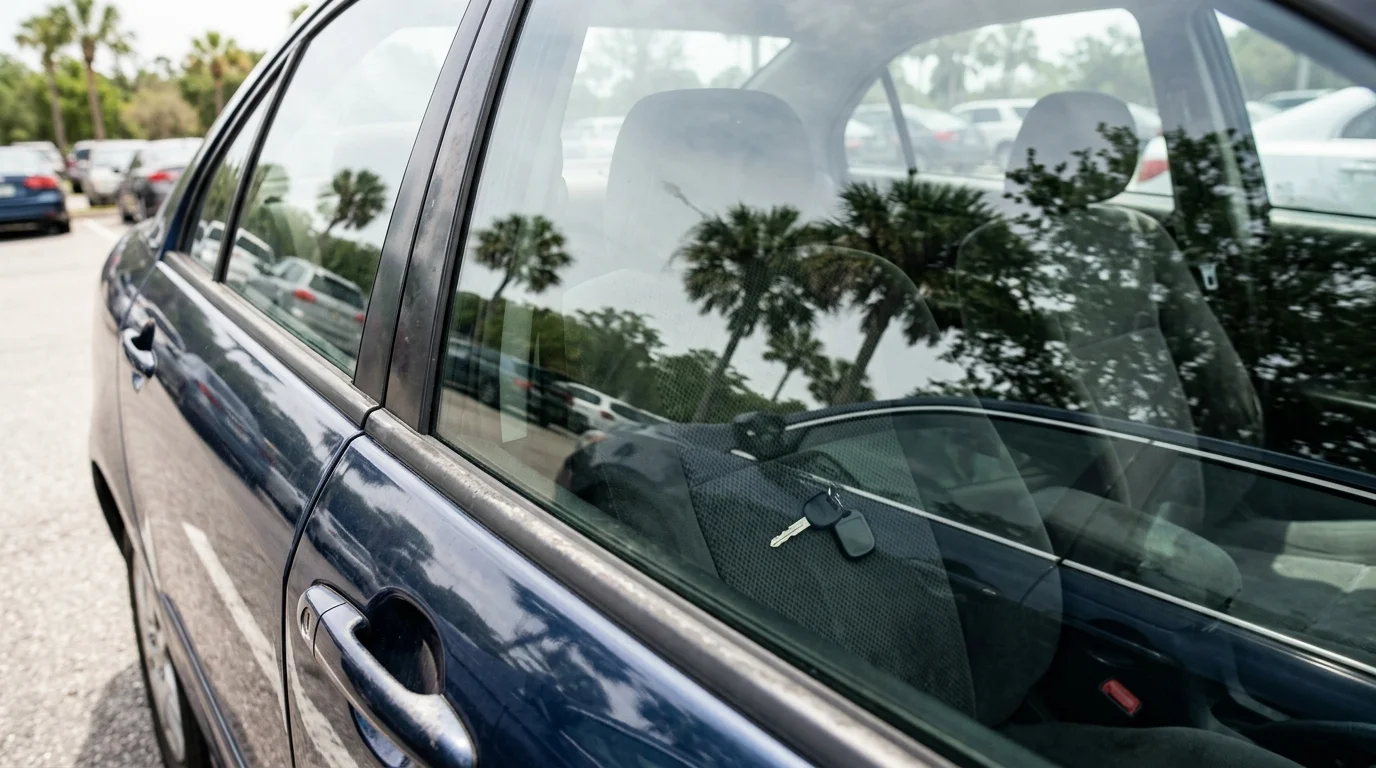
A lockout call is mainly about restoring access. The key may be visible on the seat, sitting in the trunk, or trapped inside a closed vehicle. The car should otherwise be ready to drive once you recover it.
A locksmith call involves the key or locking system itself. That may be the better route when the key is missing, broken, or stuck. An electronic recognition problem can also be different from a locked door. Quick Tow Orlando doesn’t promise key cutting or fob programming.
Describe the problem before an operator is sent. “My keys are on the driver’s seat” gives a clearer picture than “my car won’t open.” Mention whether the key is missing, visible, broken, or locked in the trunk. Include the vehicle’s year, make, model, and exact location.
A separate problem may appear after the door opens. The battery could be drained, the tire could be flat, or the vehicle might not start. Those situations may call for roadside assistance instead of entry alone.
If the car was damaged during a crash, don’t treat access as the whole job. Know whether it can roll, steer, and sit safely where it is before you dial. The operator needs the full situation before accepting the call.
Be ready to explain your relationship to the vehicle. Keep identification available if it isn’t locked inside. If it’s a rental, work vehicle, or borrowed car, say that before work begins. The operator can then tell you what information is needed.
If a child or a pet is inside, dial 911 first, every time
A child or pet inside changes the situation immediately. Dial 911 first, every time. Don’t spend those first moments requesting routine roadside service or comparing quotes.
Give the emergency operator your exact location. In a large International Drive garage, include the level, row, and nearest entrance. In a theme park or hotel lot, identify the section and closest landmark. A street address alone may not pinpoint the car.
If your phone is also locked inside, ask a nearby person to call 911. Parking staff, security personnel, or another driver may also help communicate your precise location. Follow the emergency operator’s instructions once the call connects.
Don’t leave the car to search for tools. Stay where responders can find you, unless traffic or another immediate danger makes that unsafe. Don’t try an improvised entry method while emergency help is being coordinated. A damaged window or door can add another hazard.
The same priority applies beside I-4, SR 408, or another busy road. Tell 911 if the vehicle is in a travel lane or exposed shoulder. Move yourself away from traffic when you can do so safely.
FDOT’s published Road Ranger service list doesn’t include vehicle lockouts. Don’t assume that patrol is a substitute for 911 when a child or pet is trapped. Roadside service can be considered after the immediate emergency is under control.
What the tech actually does to a modern door
There isn’t one opening method for every modern vehicle. Door frames, window seals, handles, locks, and electronic systems vary. The operator should first identify the vehicle and understand where the key is located.
Expect questions before anyone touches the car. Is the key on a seat or inside the trunk? Is every door locked? Does a physical key turn without opening the door? Did the problem begin after a battery issue? Clear answers help separate a basic lockout from a mechanical or electronic fault.
The operator then assesses possible entry points. The chosen approach should fit that specific vehicle. Ask what method will be attempted and what parts of the door it may contact. If the operator sees a material risk of damage, discuss the next option before approving work.
Photograph the door, glass, trim, and weather seal before entry begins. This creates a simple record of existing scratches, dents, or loose trim. It also makes the condition easier to review afterward.
Avoid pushing household tools between the glass and door. A coat hanger, screwdriver, or improvised wedge can contact parts you can’t see. Forcing the handle can turn a lockout into a door repair.
Once the door opens, retrieve the key and check the affected area. Test the handle, window, lock switch, and door seal before the operator leaves. If the vehicle still doesn’t recognize the key, stop treating the problem as a basic lockout.
If the car won’t start after entry, explain what happens when you try. A silent vehicle, warning message, or damaged key may change the next service needed. Don’t approve a tow until you understand why the car must be moved.
The three places it happens most around here
We couldn’t confirm a public Orlando dataset ranking car lockouts by location. These aren’t measured top-three sites. They’re three local settings where precise directions and access details matter most.
-
International Drive parking areas. Garages, hotel lots, and large surface lots can share similar entrances. Give the property name, level, row, and nearest pedestrian exit. Mention any gate, height restriction, or ticket needed to reach the vehicle.
-
Shopping, medical, and residential parking. Lake Nona, Winter Park, and other Orlando-area districts contain large lots and multi-building properties. A business name may not identify the correct entrance. Share the street-facing entrance, building number, and a fixed landmark near the car.
-
Stops beside major roads. I-4, SR 408, SR 417, SR 429, and the Turnpike require more care than a normal parking lot. State whether the car is in a marked lot, a service area, or on a shoulder. FL511 provides current Florida traffic and incident information, but it doesn’t arrange a lockout operator.
Turn on the hazard lights if you can access them without entering traffic. Don’t stand between the car and moving vehicles. If the location feels unsafe, explain that clearly when requesting help.
A lockout can also expose a second problem. The car may be blocking traffic, sitting after a collision, or unable to move once opened. In those cases, entry alone may not solve the situation. Give the operator the whole picture so the correct service can be considered.
Location also affects which local towing rules apply if the job becomes a tow. A pickup inside Orlando city limits isn’t governed by the same schedule as one in unincorporated Orange County. That distinction doesn’t set a price for a standalone lockout, but it matters if the vehicle is removed.
What car lockout service costs, and what may not be added
We couldn’t confirm a verified public Orlando price for a standalone lockout call. Don’t rely on an unsourced average or a price copied from another city. Ask for the total before an operator is dispatched.
Start with a precise description. Give the year, make, model, exact location, and where the key is. State whether you need entry only or whether the vehicle may also need towing. Ask what happens if the operator can’t complete the entry.
Keep the quote questions direct:
- What work does the stated total cover?
- Is the request entry only?
- What amount would apply if entry isn’t completed?
- Are parking, gate, or property-access costs involved?
- Would towing require a separate approval?
Orange County Chapter 35 lists which extra charges are allowed on a regulated trespass or nonconsensual bill. A standalone lockout you requested is not that bill. Get the lockout total before anyone starts the work.
A tow you request is a consensual job, priced by the operator. A standalone lockout call is not converted into a capped tow merely because a towing operator handles it.
Outside unincorporated Orange County, do not assume the county table follows the vehicle. A city may have its own code. The county’s official towing information page explains the county rules, but those county maximums are not a price list for a lockout you requested.
If the car only needs opening, keep the request limited to that work. If it also needs towing, ask for a separate explanation before approving the move. Our guide to Orlando towing costs explains why pickup location and tow type matter.
When to call us
Call when the key is inaccessible and improvised entry risks damaging the vehicle. Quick Tow Orlando will connect you with a local operator and relay the details you provide.
Call us at (321) 321-9797.