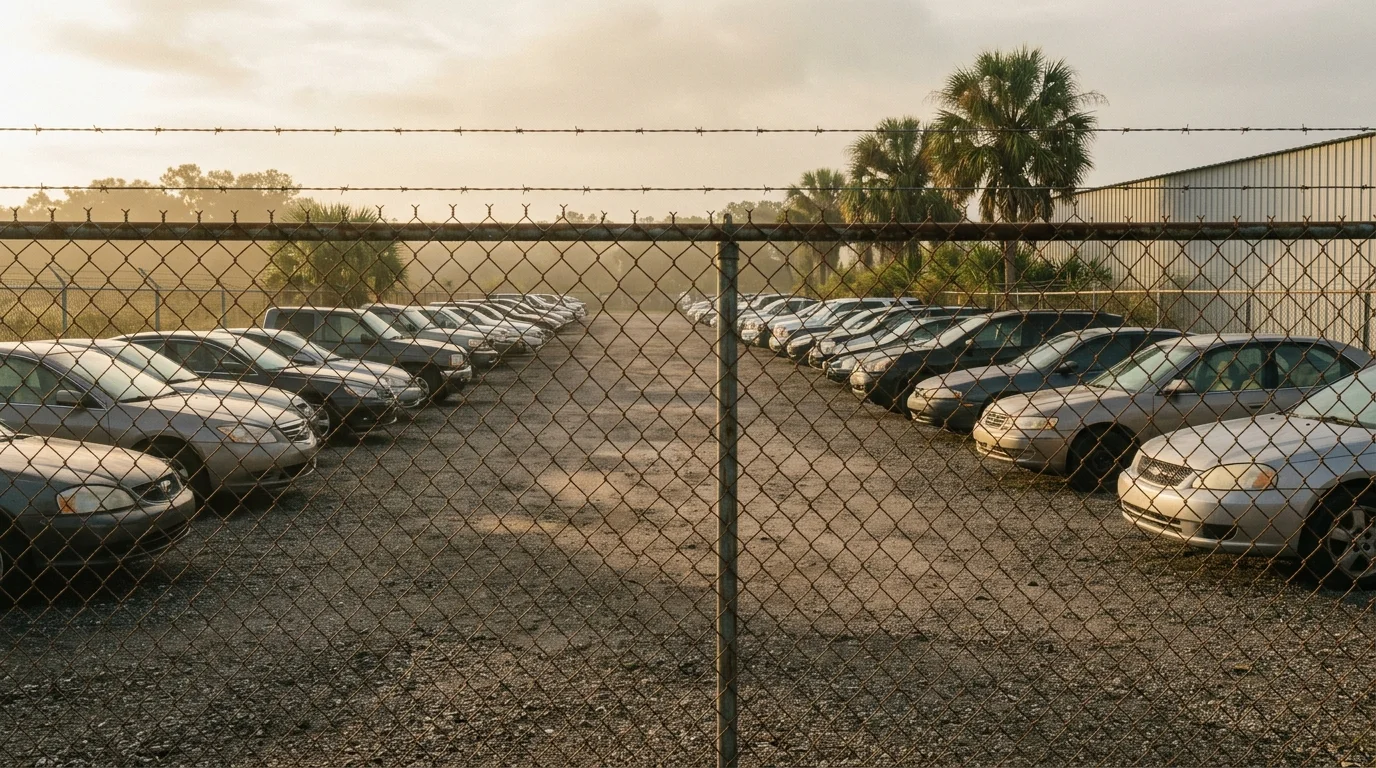
People ask do they impound your car for DUI in Orlando, and the answer is sometimes: the car may be towed and placed under an agency hold after a DUI stop. That outcome isn’t automatic in every case, though. Your first task is finding out whether the vehicle was simply towed or remains under an agency hold.
This guide isn’t legal advice. It explains the towing and storage process, not the DUI charge or your criminal case.
Do they impound your car for DUI, or just tow it?
A DUI stop on I-4, SR 408, SR 417, or International Drive may end with the vehicle leaving on a tow truck. An investigating agency can direct a local operator to move it to a storage facility. The agency may also place a hold connected with the DUI impound.
Those are separate actions. The tow moves the vehicle off the road. The hold tells the storage operator whether the vehicle can be released.
Before leaving the scene, ask for these details if circumstances allow:
- The name of the investigating agency
- The tow operator’s name
- The vehicle’s destination
- Whether an agency hold was placed
- The incident or report number, if one is available
Keep any tow slip, property receipt, or agency paperwork you receive. Take clear photos of each document. Someone helping you later will need the names and numbers printed there.
The road itself doesn’t always identify the investigating agency. A stop inside Orlando, near Winter Park, or along a state highway may involve different agencies. Don’t assume the storage yard can answer every question about the hold.
If the vehicle’s location isn’t on your paperwork, start with our guide to finding a towed car in Orlando. Orange County also maintains an official towing information page with local guidance.
Find the car first. Then ask the investigating agency and storage operator about its status separately.
A hold is not the same as a tow, and the difference costs money
A tow is the physical movement of the vehicle. An agency hold is an instruction affecting its release. The tow may be finished while the hold remains active.
That difference matters at the storage counter. A tow operator may have possession of the car without having authority to release it. Paying the available balance doesn’t cancel an investigating agency’s hold.
Ask the yard one direct question: “Is there an active agency hold on this vehicle?” If the answer is yes, ask which agency placed it. Then contact that agency to confirm the hold’s status and the steps for obtaining release authorization.
Towing and storage charges are separate from the criminal case. Storage may continue accruing while the hold remains in place. Orlando and Orange County schedules count covered storage periods in 24-hour blocks, not by calendar date.
Don’t assume one posted private-property rate applies to every DUI tow. City of Orlando Chapter 39 covers certain tows originating inside city limits, but its maximum-rate schedule excludes law-enforcement-directed tows. Orange County Chapter 35 has a different scope outside the city.
Ask the storage operator which rule or agreement controls the bill. Request an itemized statement showing the tow, each storage period, and any additional charge. Keep copies of all receipts.
Our guide to rights after an Orlando-area tow explains more about local jurisdiction and disputed charges.
The five-day clock, and the thirty-day one people confuse it with
Florida Statute 323.001 sets the timeline for an investigating agency’s hold at a wrecker operator’s facility. DUI impounds are among the situations covered by that statute.
The initial hold may last five days, excluding weekends and holidays. The investigating agency can extend that hold in writing. This doesn’t mean every vehicle must be released on the sixth calendar day. Weekends, holidays, and a written extension can change the status.
Confirm the dates with the agency that placed the hold. Don’t calculate them from memory or rely only on what someone says at the storage counter.
The 30-day rule has a different purpose. If the hold continues, the agency must take possession of the vehicle within 30 days of the first day it was stored. The agency and operator may agree to another timeframe in writing.
That deadline applies to the agency. It isn’t a rule saying your car may simply sit in the yard for 30 days. It also isn’t an automatic promise that the owner receives the vehicle on day 30. Agency possession may involve moving the vehicle rather than releasing it.
A separate Florida lien-sale timeline applies to an unclaimed vehicle. Under Florida Statute 713.78, that clock is 35 days for a vehicle more than three model years old. It is 57 days for a vehicle three model years old or newer. Both run from when storage begins.
Those lien-sale periods aren’t the same as the agency’s 30-day possession deadline. One doesn’t replace the other.
Ask both the agency and yard to confirm:
- The date storage began
- Whether the five-day hold remains active
- Whether a written extension exists
- Who can authorize release
- Which unclaimed-vehicle timeline the yard is applying
Don’t wait for a criminal court date before making those calls. The court calendar and storage timeline are separate.
Storage keeps running while the case does not
A DUI case may move slowly. The storage account follows its own clock. Charges may continue while you’re waiting for an agency decision, paperwork, or a later court appearance.
Ask the yard when each 24-hour storage period begins. Midnight may not be the dividing line. The applicable Orlando and Orange County rules measure covered storage in full 24-hour increments from delivery to the facility.
No single Orlando-wide DUI impound price can be confirmed from the local rate schedules. The pickup location matters. So does the agency ordering the tow and the reason for removal.
A law-enforcement-directed tow inside Orlando doesn’t fall under the city’s ordinary maximum-rate schedule. A tow originating in unincorporated Orange County may follow different county rules. A tow requested by the vehicle owner is different again.
Get the controlling rate information directly from the yard before paying. Ask for the current total and the exact time another storage period begins. Save the name of the person who provided the information.
Personal-property rules also depend on jurisdiction. For a tow governed by Orange County Chapter 35, the owner may inspect the vehicle and retrieve belongings at any time. The owner doesn’t have to pay first or sign a release or waiver. Our guide to retrieving belongings from a towed car explains that county protection.
Orange County’s ordinance also says expired registration can’t block a vehicle’s release. That county rule doesn’t cancel an active agency hold, however. Clear the hold first, then address the yard’s release process.
Getting the car released, step by step
Start as soon as you know the car was removed. Waiting for the DUI case to finish can add storage time and increase the chance of a lien-sale issue.
-
Locate the vehicle. Use the tow paperwork, investigating agency, and official local towing resources. Confirm the storage facility’s full name and address before traveling there.
-
Identify the hold authority. Ask the yard whether an agency hold is active. Record the agency’s name, the incident number, and the date storage began. The storage operator and investigating agency may track different parts of the process.
-
Contact the investigating agency. Ask whether the initial hold expired, was extended in writing, or remains active for another reason. Confirm which office or person can approve the vehicle’s release. Don’t treat a verbal guess from an unrelated office as clearance.
-
Ask what the yard requires. Confirm its current balance, accepted payment methods, identification requirements, pickup procedure, and the next storage cutoff. Ask whether the vehicle can be driven away safely or needs another tow.
-
Retrieve essential belongings if needed. Medication, identification, house keys, and work equipment may be inside. If Orange County Chapter 35 governs the tow, the owner may inspect the car and remove personal belongings without paying first.
-
Document the release. Keep the itemized bill, payment receipt, property receipt, and any agency authorization. Photograph the vehicle before moving it. Note visible damage without arguing about responsibility at the counter.
-
Arrange transportation when the car can’t be driven. A released vehicle may still have crash damage, a mechanical problem, or another condition making private transport the better choice. Confirm that the agency hold is cleared before sending another operator.
For a tow governed by Orange County Chapter 35, the storage operator must release the vehicle within 30 minutes of payment. An expired registration can’t be used to block that county release. Those protections don’t give a yard permission to override an active agency hold.
If the vehicle remains withheld after the agency clears it, ask for the reason in writing. Florida Statute 713.78 provides a county-court complaint process for alleged wrongful taking or withholding. It also provides a bond route before a lien sale. Because those steps carry deadlines, consider getting legal advice promptly.
When to call us
Once the agency authorizes release, call when the vehicle can’t be driven from the yard or needs transport to a repair shop. Quick Tow Orlando’s emergency towing line connects you with a local tow operator. Call us at (321) 321-9797.