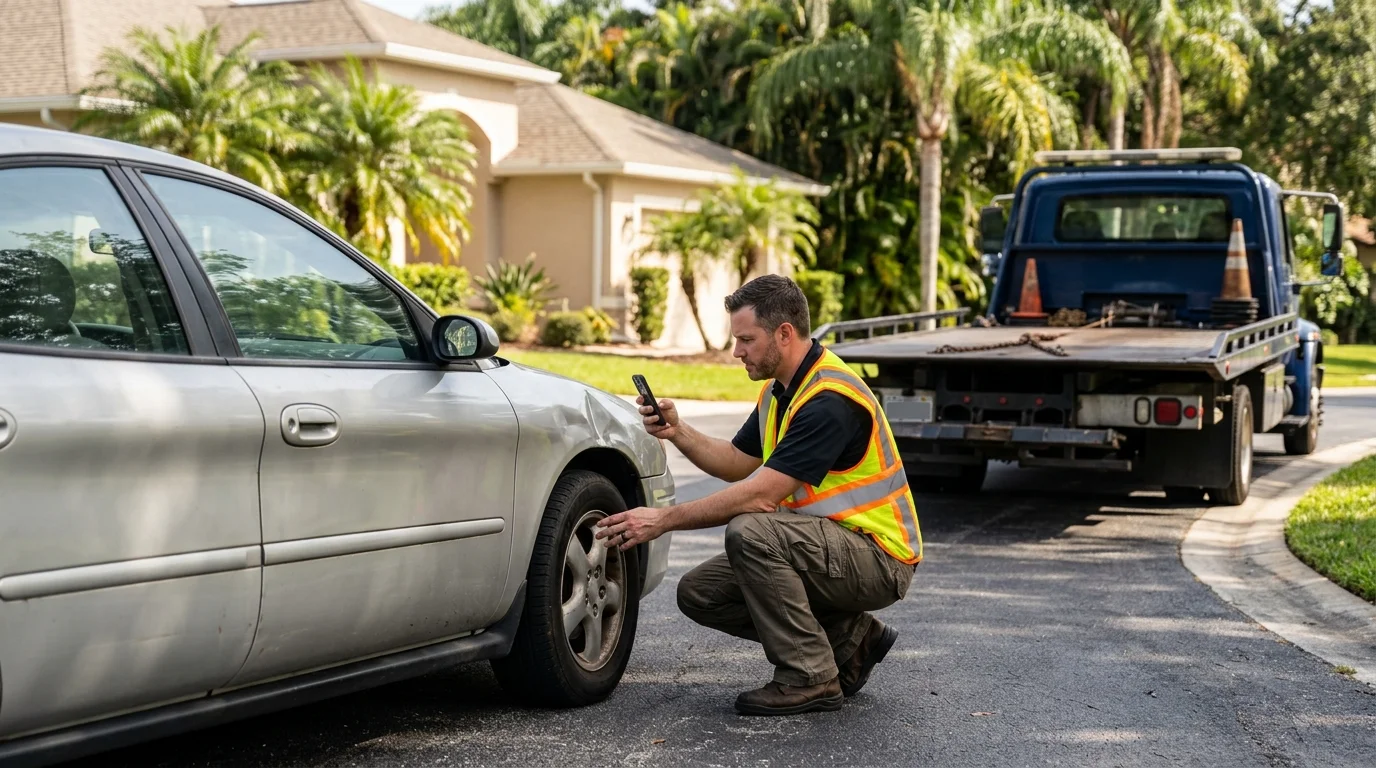
If you need a car towing service long distance from Orlando, prepare the pickup before the operator arrives. Confirm the car’s condition, access, keys, destination, and authorized contact. Put the agreed scope in writing before the vehicle leaves.
Confirm whether the car rolls, steers, and brakes
Describe the car as it sits today. Don’t rely on how it drove before the breakdown. The operator needs current details to plan the pickup and choose suitable equipment.
Start with the basic operating condition. Say whether the engine starts and whether the transmission can shift. Confirm whether the parking brake releases. Tell the operator if the steering turns, the brakes respond, and each wheel can roll.
Mention anything that may affect loading:
- Flat, missing, damaged, or locked wheels
- Collision damage or loose body panels
- Fluid leaking beneath the vehicle
- Very low ground clearance
- A steering wheel or transmission that’s locked
- Missing keys or a dead key fob
- Aftermarket suspension, wheels, or body parts
- A vehicle parked against a wall, curb, or another car
Don’t start, shift, or push a damaged car just to test it. Explain what you already know and let the operator decide what must happen next. Photos can help when a wheel position or clearance problem is hard to describe.
Ask what transport method fits the reported condition. Flatbed towing may be one option the operator discusses. The right plan depends on the actual vehicle, damage, access, and destination.
Pickup conditions matter too. A disabled car inside a parking garage near International Drive presents a different access problem than one sitting in a driveway in Winter Park. Share the floor, entrance, gate, ceiling, and turning details you can confirm. If the car is beside I-4, SR 408, or another busy road, describe its exact position without stepping into traffic.
Choose a destination that can receive it
A long tow shouldn’t begin with an uncertain drop-off. Give the operator the complete destination address and the name of the receiving person or business. Confirm those details directly with the destination before pickup.
Call the repair shop, dealership, storage location, or property contact. Ask whether they’ll accept the vehicle in its current condition. A shop may need the customer name, vehicle details, keys, or repair authorization before accepting delivery. Don’t assume an unattended drop is allowed.
Discuss the physical drop-off area as well. Tell the operator about gates, parking decks, narrow driveways, steep approaches, reserved spaces, or restricted entrances. If a shop uses a separate service entrance, get those directions from the shop. Provide a contact who can solve an access problem during the handoff.
This step becomes especially important when moving a disabled car across Central Florida. The receiving plan could involve a home in Kissimmee, a repair facility near Lake Nona, or a dealership in Sanford. A correct street address alone doesn’t confirm where the car should be placed.
Use the same destination details when requesting long-distance towing from Orlando. Tell the operator whether someone will meet the vehicle and who may approve changes. If the destination can’t accept the car, choose another location before transport begins.
If you haven’t chosen the transport method yet, read our guide to deciding whether to tow or ship a non-running car from Orlando. That decision should be settled before you prepare the final pickup instructions.
Plan keys, access, and pickup authorization
Decide who will release the car and hand over its keys. If you won’t be present, identify an authorized person before the pickup. Give that person the operator’s confirmed instructions and your correct contact details.
Ask the operator what ownership or authorization documents must be shown. Requirements can depend on the circumstances and the parties involved. Don’t assume a photo of one document will always be enough. Confirm the accepted paperwork directly with the operator.
Have the vehicle identification details available. Check that the name, vehicle, pickup address, and destination match the information supplied for the job. Florida’s motor vehicle title and registration information can help you find the proper state resource if a record needs attention. It doesn’t replace the operator’s pickup requirements.
Provide every key or device needed for the handoff. That may include an ignition key, key fob, wheel-lock key, gate remote, or garage access device. Tell the operator which items must travel with the car. Don’t hide a key outside unless that exact arrangement has been accepted.
Clear a usable path to the vehicle. Move other cars when you’re authorized to do so. Open agreed gates and check whether the pickup contact can enter the property. For an apartment complex, parking garage, or controlled lot, confirm access with the property’s authorized representative.
Remove cash, medication, electronics, documents, toll transponders, garage remotes, and sentimental items. Ask the operator whether any other personal belongings may remain. Don’t use the car as unconfirmed cargo space for boxes or household goods.
Finally, exchange reliable contact details. Include the vehicle owner, pickup contact, destination contact, and person authorized to approve a change. Make sure everyone knows their role before the handoff begins.
Document the vehicle before transport
Create a clear record of the car’s condition near pickup time. Use photos and short notes. Keep the original files until the vehicle has been received and inspected.
Photograph the full exterior from each side and corner. Include the roof, bumpers, doors, mirrors, wheels, glass, and lower body panels. Take closer photos of existing dents, scratches, cracked trim, loose parts, and collision damage. Use enough light to show the condition clearly.
Photograph the interior after removing personal belongings. Include the seats, dashboard, center console, cargo area, and any loose components. If the display powers on without forcing the car to start, record the visible odometer and fuel gauge. Don’t operate a damaged vehicle solely to obtain those images.
Record practical pickup details too. Photograph the vehicle’s position, nearby obstacles, wheel direction, and ground clearance. These images can help explain a tight driveway in College Park or a parking space near downtown Orlando. Avoid blocking traffic or entering an unsafe area for a better angle.
Make a short written list of known problems. Note whether the vehicle starts, shifts, steers, brakes, or rolls based only on what you’ve confirmed. Add any warning lights, leaks, missing parts, or key issues you already observed. Send relevant details through the communication method accepted by the operator.
Photos don’t replace the operator’s inspection or written terms. They give both parties a shared starting record. At delivery, the authorized receiver should inspect the car and report any concern through the operator’s stated process.
Confirm the written scope with the operator
Review the job details before the truck rolls. A written scope reduces confusion between the owner, pickup contact, operator, and destination. It should reflect the actual condition and route discussed.
Confirm these items in writing:
- The pickup address and exact vehicle location
- The destination address and correct entrance
- The vehicle’s year, make, model, and identifying details
- Whether the car starts, shifts, steers, brakes, and rolls
- Known damage, leaks, modifications, or clearance concerns
- The keys and documents available at pickup
- The authorized pickup and destination contacts
- The planned transport method
- The agreed handoff procedure
- The full price and accepted payment arrangement
Ask what circumstances could change the written scope. Examples might include vehicle details that differ at pickup, blocked access, a destination refusal, or additional handling not disclosed earlier. Don’t approve an unclear change through someone who lacks your authorization.
The operator should confirm the full price before the truck rolls. Ask which services are included and what conditions could add a charge. Quick Tow Orlando doesn’t publish a rate card, so don’t rely on an unverified per-mile figure or an assumed total. Our guide to long-distance tow costs from Orlando explains which job details to organize before discussing price.
Also ask how delivery will be documented. Confirm who can receive the keys, where the car may be placed, and what happens if the named contact can’t accept it. Get the operator’s process for reporting a condition concern after delivery.
Keep copies of the written scope, photos, messages, and payment records together. Send the final instructions to the pickup and destination contacts. If any important detail changes, notify the operator before transport begins and request an updated confirmation.
Quick Tow Orlando connects drivers with independent towing and roadside operators. The brand doesn’t perform the tow or own the transport equipment. The operator handling the vehicle is responsible for confirming the job-specific scope.
When to call us
A long-distance tow is worth arranging when a car can’t be driven safely or needs a planned handoff outside the immediate Orlando area. Quick Tow Orlando takes calls at any hour, dispatches Monday to Friday from 8 a.m. to 10 p.m., and can connect you with a local operator after collecting the vehicle, access, and destination details. Call us at (321) 321-9797.