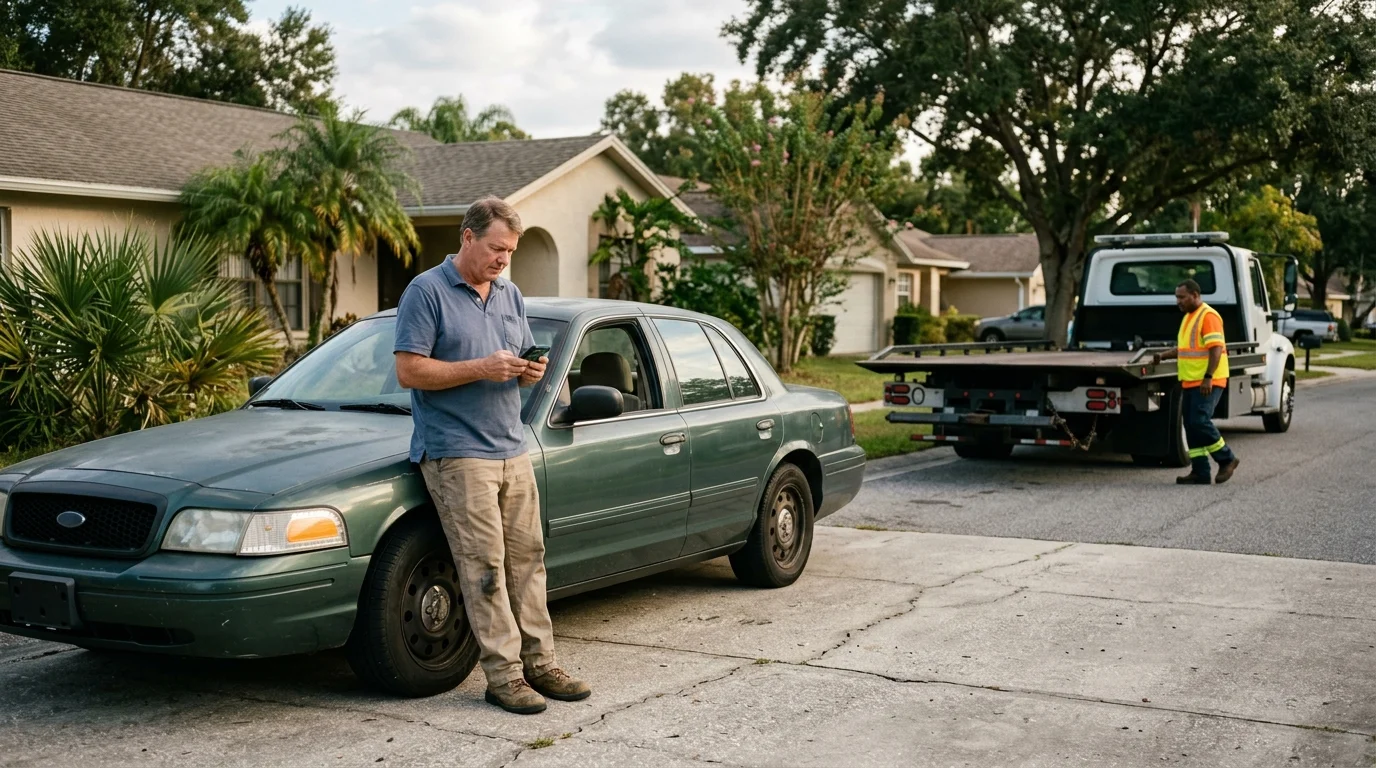
Yes, you can schedule a tow truck ahead of time when an operator accepts advance bookings. It’s useful for a disabled car, repair appointment, vehicle purchase, or planned move. Availability still depends on the operator, equipment, route, and pickup conditions.
A scheduled tow isn’t the same as an emergency roadside call. You’ll have more time to confirm the vehicle’s condition, clear access, and coordinate with the destination. Quick Tow Orlando can collect those details and connect you with a local operator.
Know when a planned tow makes sense
Planned vehicle towing works well when the car is secure and doesn’t need immediate removal. Common examples include a non-running car in a driveway, a vehicle headed to a repair shop, or a project car moving between properties.
It can also help when you’ve purchased a vehicle that shouldn’t be driven yet. The same applies when a shop has finished its inspection, but the car needs transport elsewhere. If the trip leaves the Orlando area, ask about long-distance towing while planning the route.
A scheduled pickup gives you time to handle details before the operator arrives. You can locate the keys, photograph the vehicle, and confirm where it’s going. You can also ask whether the operator accepts advance bookings for your preferred day.
Don’t treat an advance request as confirmed until the operator approves it. Some operators organize planned jobs differently from roadside emergencies. Weather, road conditions, equipment needs, and other active calls can also affect the schedule. Ask how the operator handles changes and when you should check the booking again.
An urgent breakdown belongs in a different category. A disabled vehicle beside I-4, SR 408, or the Turnpike needs immediate roadside coordination. Move away from traffic when possible and follow directions from responding authorities. Scheduling is better suited to vehicles already parked somewhere secure.
Think about the distance, too. A trip from Lake Nona to Winter Park needs different planning than a move within one neighborhood. Longer routes require clearer coordination between the pickup point, operator, and destination.
Choose the pickup and destination before booking
Start with complete addresses for both ends of the tow. A street address alone may not identify the correct entrance. Apartment complexes, dealerships, repair facilities, and shopping centers often have several access points.
Give the operator useful landmarks when they’re available. Explain whether the vehicle is inside a garage, behind a gate, or near a specific building. For an International Drive hotel or downtown Orlando garage, identify the entrance closest to the vehicle. Don’t assume the truck can use every driveway or parking entrance.
Confirm the destination directly before booking. Ask the repair shop, dealer, storage location, or property owner whether they’ll accept the vehicle. Find out where they want it placed and whether someone must receive the keys. If the destination has limited receiving hours, share those restrictions with the operator.
For a private residence, decide where the vehicle can be left without blocking traffic, sidewalks, mailboxes, or another car. Get permission from the property owner when the destination isn’t yours. The operator may decline a placement that appears unsafe or unauthorized.
Longer trips need another layer of preparation. Review our guide to long-distance tow costs from Orlando for the questions that can affect a trip. Don’t rely on a general description such as “the shop near Kissimmee.” Provide the exact destination and a working contact there.
Ask what happens if the destination can’t receive the vehicle. The operator might require another approved location before pickup. Solving that issue early helps prevent the car from reaching a locked gate or closed facility.
Describe whether the vehicle can roll and steer
The operator needs an accurate description of the vehicle’s condition. “It won’t start” doesn’t explain whether it rolls, steers, brakes, or shifts into neutral. Those details help the operator decide whether the requested job matches the available equipment.
Tell them if any wheel is locked, missing, damaged, or turned against a curb. Mention flat tires, broken suspension parts, collision damage, low ground clearance, or anything hanging beneath the car. Share whether the parking brake releases and whether you can access the transmission controls.
Don’t test damaged steering, brakes, or wheels if doing so feels unsafe. Describe what you can see and let the operator ask follow-up questions. Photos of the wheels, vehicle position, driveway, and nearby obstacles can clarify the setup. Avoid sending documents or images that expose unrelated personal information.
Ask whether flatbed towing is appropriate for the vehicle and its condition. Don’t select equipment based only on the model name. A modified car, damaged wheel, tight garage, or blocked driveway can change what’s workable.
Say where the keys are and whether the battery has power. Some vehicles use electronic parking brakes, keyless controls, or special transport settings. Check the owner’s manual for instructions tied to your exact model. Don’t guess at a procedure or force a control that won’t move.
Also disclose anything inside or attached to the vehicle that changes its profile. Examples include a roof box, cargo carrier, trailer connection, or loose exterior panel. Remove unsecured personal items before pickup when you can. Keep valuables, medication, identification, toll devices, and house keys with you.
An honest condition report matters more than a polished description. If you don’t know whether the car can roll or steer, say so. The operator can then explain what information or photos are needed before confirming the job.
Check access at both ends of the trip
A vehicle can be easy to locate but difficult to reach. Walk the pickup area before booking and look at the route from the street to the car. Note gates, low ceilings, narrow turns, steep driveways, parked vehicles, landscaping, and overhead obstructions.
Downtown Orlando garages and apartment structures deserve extra attention. Find any posted clearance information and share it with the operator. Ask whether the assigned equipment can enter the structure. If it can’t, don’t attempt to move a disabled vehicle without a safe plan.
Gated communities create another common issue. Confirm how the operator should enter and whether the guard or call box needs advance notice. Arrange access without sharing permanent entry credentials. If the vehicle is in a managed lot, ask management where towing activity is permitted.
Clear the space around the car when you have permission. Move trash bins, bicycles, garden equipment, and other vehicles. Don’t move property that belongs to someone else. Ask the operator how much working room the assigned equipment needs.
Check the destination the same way. A repair shop may use a rear service entrance instead of its customer driveway. A residential destination may have street parking restrictions, a locked gate, or no suitable drop area. Confirm the receiving location before the vehicle leaves Orlando, Sanford, or Kissimmee.
Access can change during the day. School traffic, deliveries, construction activity, and full parking areas may block the entrance you described. Tell the operator about known restrictions, then report any change before pickup.
You don’t need to solve every access problem yourself. You do need to describe it accurately. When possible, send current photos showing the vehicle, approach, and intended exit path. That gives the operator better information for deciding whether the planned pickup can proceed.
Confirm the authorization before pickup
Confirm who owns the vehicle and who can approve its movement. The operator may request identification or ownership information before taking the job. Requirements can vary, so ask what documents must be available at pickup.
If the registered owner won’t attend, tell the operator before booking. Ask what authorization they’ll accept from an absent owner. Don’t assume that possession of the keys is enough. A friend, employee, buyer, seller, or family member may need additional permission.
Ownership can become less clear after a private sale, inheritance, or unfinished title transfer. Don’t invent missing information or sign for another person. The FLHSMV vehicles, tags and titles page is a starting point for checking Florida’s current title procedures.
Confirm the booking details in writing when the operator offers that option. Review the vehicle description, pickup address, destination, contact names, and access instructions. Include the plate or vehicle identification details only through the operator’s accepted process.
Ask about charges before approving the tow. The total can depend on the route, vehicle condition, required equipment, access, and destination. Our guide to tow costs in Orlando explains what to ask without assuming a fixed local price. Confirm the current amount directly with the operator.
Prepare for pickup by removing valuables and gathering the requested documents. Photograph the vehicle’s exterior from several angles. Include the wheels and any existing damage. Keep those images for your records rather than treating them as a substitute for an inspection.
Finally, confirm who’ll hand over and receive the keys. If the destination uses a key drop, get its instructions directly from that location. Don’t leave keys in an exposed vehicle unless the receiving location and operator have approved the arrangement.
When to call us
A planned tow is worth a call when a vehicle can’t be driven safely, needs special handling, or must reach a confirmed destination. We’ll gather the trip details and connect you with a local operator who can discuss advance booking availability. Call us at (321) 321-9797.