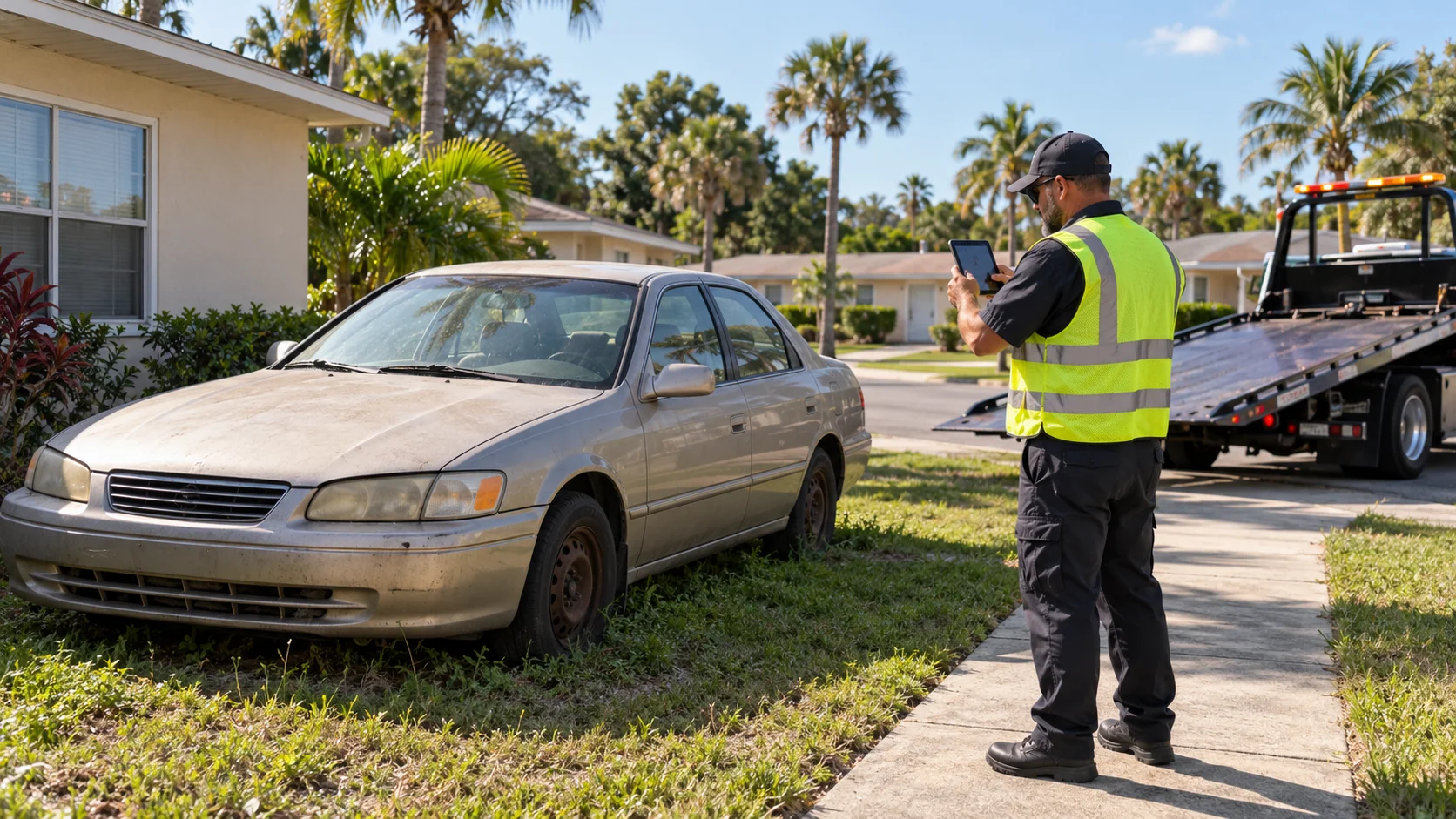
An unwanted car at a Pine Hills rental can look like a cleanup job. Don’t schedule junk car removal until you confirm who owns the vehicle and who can authorize its removal. The right path depends on the tenancy, vehicle ownership, and current property access.
Confirm who owns the property and vehicle
Start by confirming your authority over the rental property. A property manager may need approval from the property owner. An owner should also check whether a lease, court matter, sale, or management agreement limits that authority.
Then treat the car as separate property. Owning the driveway doesn’t automatically prove ownership of the vehicle parked there. The registered owner may be the current tenant, a former tenant, a relative, a lender, or someone unrelated to the tenancy.
Check the lease file, move-out records, emails, and any vehicle information the tenant provided. Look for the make, model, color, plate, and vehicle identification number. Don’t enter a locked car or remove its plate to collect those details. Photograph only what’s visible from a place you’re authorized to access.
If the tenant responds, ask whether they own the car and what they plan to do with it. A voluntary junk-car pickup generally requires clear authorization from someone entitled to transfer or release the vehicle. The paperwork needed can vary with the vehicle’s title status. Review current Florida motor vehicle title information before treating the car as transferable.
Our guide to the paperwork used to junk a car in Florida explains the documents a pickup operator may ask about. It doesn’t replace confirmation from the current operator or legal guidance.
If ownership remains unclear, stop there. Don’t sign as the vehicle owner, promise a title, or authorize dismantling. Ask an attorney or the appropriate agency how to confirm authority under the current facts.
Separate tenant property from an abandoned vehicle
“Left behind” and “abandoned” aren’t interchangeable. A current tenant’s disabled car may still be tenant property. A former tenant’s vehicle may also remain legally connected to that person, even after the keys to the home were returned.
Begin with the tenancy status. Confirm whether the tenant still occupies the property, surrendered possession, or reached the end of a termination process. Keep the supporting records together. Don’t create a removal date based only on a missed rent payment, an unanswered message, or the car’s condition.
Florida’s wrecker lien law recognizes towing at a landlord’s direction following tenancy termination. That doesn’t mean every landlord can immediately order disposal. The exact facts still matter, including who directed the tow and whether the vehicle is being removed, stored, or transferred as junk.
There are three different paths:
- Owner-approved junk removal involves consent from someone authorized to release the vehicle.
- Private-property towing removes a vehicle without the vehicle owner’s consent under applicable rules.
- An abandoned-vehicle process may involve agency procedures or legal steps before removal or disposal.
Those paths shouldn’t be blended. A tow from private property doesn’t automatically transfer ownership to the landlord. A junk pickup also shouldn’t be used to bypass a disputed tenancy or uncertain title.
Florida’s private-property towing statute includes notice and signage requirements for nonconsensual towing. It also contains exceptions involving single-family residences and personal notice. Applicability depends on the property and removal circumstances, so confirm the current rule before acting.
For a broader overview, read our guide to abandoned vehicle removal in Orlando. If you can’t identify the correct path, get legal guidance before scheduling anything.
Document the car without claiming ownership
Create a neutral record of what’s present. The goal is to document the vehicle and property, not declare that the car has been abandoned or transferred.
Take clear photographs of the vehicle from several angles. Include its position in the driveway, yard, carport, or parking area. Capture visible damage, missing wheels, open windows, fluid marks, and objects blocking access. Photograph the plate and visible vehicle identification number when you can do so without entering the car.
Also document the surrounding property. Show gates, fences, narrow turns, soft ground, low branches, parked vehicles, and the path to the street. A close photograph of the car won’t tell an operator whether recovery equipment can reach it.
Write down the date and where you observed the vehicle. Preserve messages with the tenant, owner, property manager, association, or operator. Keep copies of notices you actually sent. Don’t backdate anything or describe a notice as legally sufficient unless that has been confirmed.
Avoid moving, selling, stripping, or cleaning out the vehicle while authority remains disputed. Don’t remove personal belongings. Those actions can complicate the record and make the vehicle’s condition harder to establish.
Your notes should distinguish observation from assumption. “Front-left tire is flat” describes what you saw. “Tenant abandoned the car” reaches a legal conclusion that may not be settled.
When contacting an operator, share the photos privately. Don’t post plate numbers, vehicle identification numbers, tenant documents, or personal belongings online. A clean record helps the operator understand the job without suggesting that you own the car.
Check access and current vehicle condition
Once authority is being resolved, inspect access from the public street to the vehicle. Pine Hills rental properties can include single-family homes, duplexes, and shared parking arrangements. Describe the actual site instead of assuming ordinary driveway access.
Confirm whether the vehicle rolls, steers, and has usable tires. Note whether it’s stuck in park, missing keys, sitting on blocks, or resting on damaged suspension. Don’t try to start it if ownership or condition remains uncertain.
Check the route around the car. Measure tight gates or narrow clearances if they may affect access. Note fences, roof overhangs, drainage areas, landscaping, overhead branches, and other vehicles. Tell the operator if the car sits behind the home or on unpaved ground.
A vehicle trapped behind a rental may require a different recovery plan than one facing the street. Our guide to a junk car trapped behind a home explains which access details matter before equipment is assigned.
Look for immediate hazards without disturbing them. Report leaking fluids, broken glass, unstable supports, standing water, or fire damage. Keep tenants, children, and pets away from an unsafe vehicle. Don’t crawl beneath it or attempt to pull it with another car.
Share accurate condition details when requesting junk car and abandoned vehicle removal. Photos of the access route are often as useful as photos of the car. They let the local operator assess the setup before accepting the job.
Verify removal authority before scheduling pickup
Before setting a pickup, decide which removal path applies. Don’t ask an operator to make that legal decision from a photograph. Be ready to explain the tenancy status, property type, vehicle ownership information, and authorization you can provide.
For owner-approved junk removal, confirm that the person giving permission can release the vehicle. Ask the operator what current documents they require. Don’t promise that missing paperwork can be replaced at pickup.
For a nonconsensual tow, review the current private-property rules first. Florida requires qualifying tow-away signs to meet detailed standards. Those standards cover wording, visibility, placement, operator information, installation height, and how long signs must remain posted. Single-family residences and personal notice can be treated differently under the statute, but don’t assume an exception applies without checking.
Orange County publishes current towing and parking information. Confirm whether the rental address falls under Orange County or another jurisdiction before relying on a local procedure. An Orlando mailing address alone shouldn’t decide that question.
If private-property towing is appropriate, review our private-property towing service page before calling. Explain whether the vehicle belongs to a current tenant, former tenant, guest, or unknown person. Mention any notice already given, but don’t describe it as valid unless that has been established.
If no owner can be identified, ask the appropriate agency or legal counsel about the current abandoned-vehicle procedure. We couldn’t confirm one universal landlord form, notice period, or disposal process that fits every Pine Hills rental. Don’t invent one or rely on an informal template.
Pause if the tenant disputes removal, ownership is contested, or a lender may have an interest. Resolve authority first. A clean driveway isn’t worth creating a larger title or property dispute.
When to call us
Call once you’ve confirmed your authority and gathered the vehicle and access details. Quick Tow Orlando takes calls 24/7 and connects Pine Hills property owners and managers with independent local operators.
Call us at (321) 321-9797.