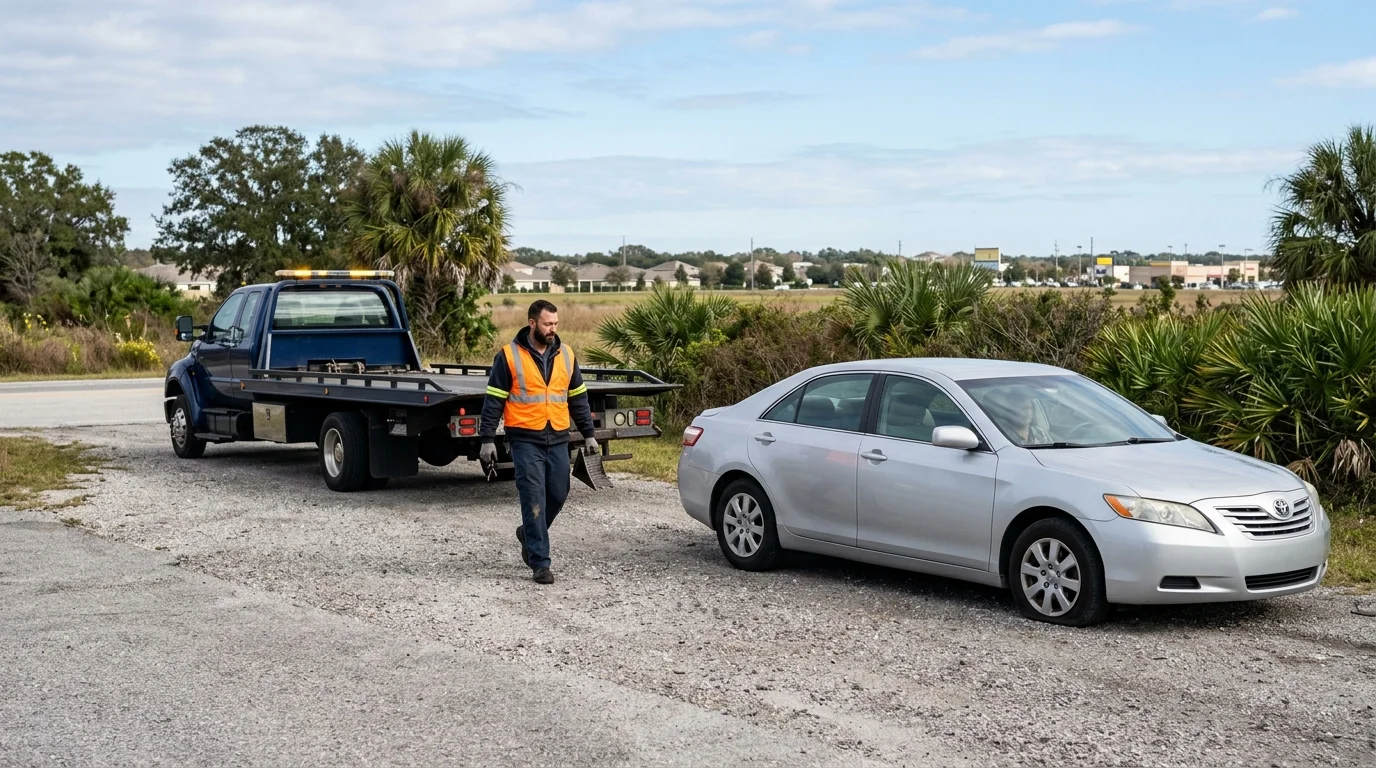
A stalled car on SR 50, SR 429, or Florida’s Turnpike needs one first move: get yourself away from traffic. Turn on the hazards, reach the safest available stopping place, and arrange roadside help or a tow once you’re secure.
Get the car clear of moving traffic
Take your foot off the accelerator and keep the steering steady. Turn on the hazard lights immediately. If the car still moves, guide it toward a wide shoulder, parking lot, or another place separated from traffic. Avoid sudden lane changes. Other drivers may not realize that your car is losing power.
Don’t try to reach a preferred exit if the car is fading fast. A nearby safe area matters more than convenience. On SR 429 or Florida’s Turnpike, stop as far from the travel lane as conditions allow. Turn the wheels away from traffic and apply the parking brake after stopping.
Consider where you can wait safely. If you can leave through a door facing away from traffic, move to a protected location. Don’t cross active lanes or stand between vehicles. If leaving would put you closer to traffic, stay belted inside and wait for instructions. Tell the person answering your call that you can’t exit safely.
Smoke, flames, a strong fuel smell, or injuries change the situation. Move away from the vehicle when you can do so safely. Call 911 and follow the emergency operator’s instructions. Don’t open a smoking hood or touch leaking fluid.
Keep the hazards running while the car remains beside the road. Florida’s Move Over law covers disabled vehicles displaying hazard lights. Drivers approaching a stopped tow truck with amber lights must also take precautions. Even so, don’t assume every approaching vehicle will move over.
After reaching safety, check FL511’s live alert list for reported incidents near your route. Don’t study the map while you’re still moving. Your immediate surroundings remain more important than an app screen.
Decide whether roadside help can solve the problem
The right service depends on what failed and where the car stopped. A minor problem may only need roadside assistance. Mechanical damage, an unsafe working area, or an uncertain diagnosis usually points toward towing.
Roadside help may fit when the problem is clear:
- The battery appears dead, but the car has no other warning signs.
- One tire is flat, and you have a usable spare.
- The keys are locked inside an undamaged vehicle.
- The car ran out of fuel in an accessible location.
Location still matters. A tire change in a parking lot differs from one beside fast traffic. Don’t attempt a repair if you would need to kneel near an active lane. A tow can move the car to a safer place before anyone works on it.
Request emergency towing when the vehicle can’t be driven safely. Warning signs include steering trouble, weak brakes, repeated stalling, overheating, collision damage, or a wheel sitting at an unusual angle. A shredded tire without a usable spare also calls for more than a roadside adjustment.
Don’t keep restarting an engine that smokes, knocks, or immediately shuts down. Repeated attempts can make the condition harder to describe. Note what happened before the car stopped, then leave diagnosis to a qualified technician.
If you’re uncertain, explain the symptoms instead of choosing equipment yourself. Those details help match the job with a local operator. Clear information helps determine whether roadside work is practical or the vehicle needs transport.
Describe your location around Winter Garden
A precise location prevents confusion before the operator starts toward you. Don’t give only “Winter Garden” or a nearby neighborhood. State the road, direction of travel, closest cross street, and the side where your car stopped.
Useful descriptions include details such as:
- Westbound or eastbound on SR 50.
- Northbound or southbound on SR 429.
- Your nearest Florida’s Turnpike exit or visible mile marker.
- A surface-street crossroad or parking-lot entrance.
Share a map pin when your phone allows it. Then confirm the pin with words. A digital location may not show which shoulder, entrance, or side of a divided road you’re on. Say whether you’re beside the outside shoulder, near a median, or inside a business parking area.
Don’t walk along the shoulder just to find a road sign. Report the last exit or intersection you remember. You can also describe visible landmarks, vehicle direction, and nearby ramps without leaving your safe position. If a business name is clearly visible from where you’re waiting, include it.
Drivers stopped near an interchange should explain which road they’re actually on. “Near SR 429” could mean the highway, an entrance ramp, SR 50, or a nearby surface street. That distinction affects how the operator reaches you.
The same location method works elsewhere in the metro. Our guide for a breakdown on I-4 covers additional steps for that corridor. In Winter Garden, focus on direction, road access, and the safest approach to your exact stopping point.
Share the vehicle condition before dispatch
You don’t need to diagnose the car. Describe what you can see, hear, and control. The operator needs practical details about moving the vehicle, not a confident guess about the failed part.
Start with the vehicle’s year, make, model, and color. Then explain:
- Whether the engine starts or runs.
- Whether the car rolls, steers, and shifts into neutral.
- Which tire or wheel appears damaged.
- Whether collision damage blocks a wheel.
- Whether you see smoke or leaking fluid.
- Whether the vehicle sits unusually low.
- Whether you have the keys.
Mention if it’s electric, hybrid, all-wheel drive, modified, or carrying a trailer. Share only details you know. If you’re unsure about the drivetrain or towing procedure, say so. The operator can verify the transport needs before moving the car.
Explain the car’s position as well. State if it rests on pavement, grass, a slope, or against a curb. Mention narrow access, a low parking structure, locked gates, or anything blocking a truck’s approach. Don’t move cones, cross barriers, or enter traffic to create space.
Photos can help when taken from a protected spot. Capture the vehicle’s overall position and visible damage. Don’t stand in the roadway, crawl underneath, or reach near a damaged wheel. A description is enough when taking a photo would expose you to traffic.
Also report passengers, pets, and mobility needs. A tow truck may not have seating for everyone. Planning for people matters as much as arranging the vehicle’s destination.
Be honest about crashes and mechanical symptoms. “The front wheel won’t turn” is more useful than “it needs a normal tow.” Those details help the network match your call with an operator suited to the condition.
Choose a safe destination for the car
Pick the destination before transport when possible. The best choice depends on the failure, the time, and who can accept the vehicle. Don’t default to the nearest parking lot unless you have permission and a plan for moving it again.
Common destinations include:
- A repair shop that has agreed to inspect the problem.
- A tire shop when the failure appears limited to a tire.
- A dealership for vehicle-specific service or warranty questions.
- Your home or another private property where the car may remain.
Call the destination before authorizing transport. Confirm that it accepts the vehicle and ask where it should be left. If the business is closed, confirm whether it permits an after-hours drop. Don’t leave a disabled vehicle on private property without permission.
If you’re using insurance, a membership, or another roadside benefit, check its destination rules. The policy may affect where the vehicle can go or how the service gets arranged. Confirm those terms with the provider rather than relying on assumptions.
A second tow adds another handoff. Choose a destination that can address the likely problem when practical. If you’re unsure, ask the operator about workable nearby options, then contact the location yourself. The final choice should be somewhere secure and authorized to receive the car.
Remove medication, identification, electronics, house keys, and other essentials before the vehicle leaves. Take a photo of the car’s condition from a safe position. Keep the destination name and service paperwork where you can find them.
Breakdowns don’t follow business hours. Our guide to after-hours towing in Orlando explains what information to prepare for an overnight or early-morning call. Dispatch runs Monday to Friday, 8 a.m. to 10 p.m. We match callers with local operators.
When to call us
A tow makes sense when the car can’t move safely, roadside work isn’t practical, or the problem needs a repair facility. Quick Tow Orlando can connect you with a local tow operator serving Winter Garden and the Orlando metro. Call us at (321) 321-9797.