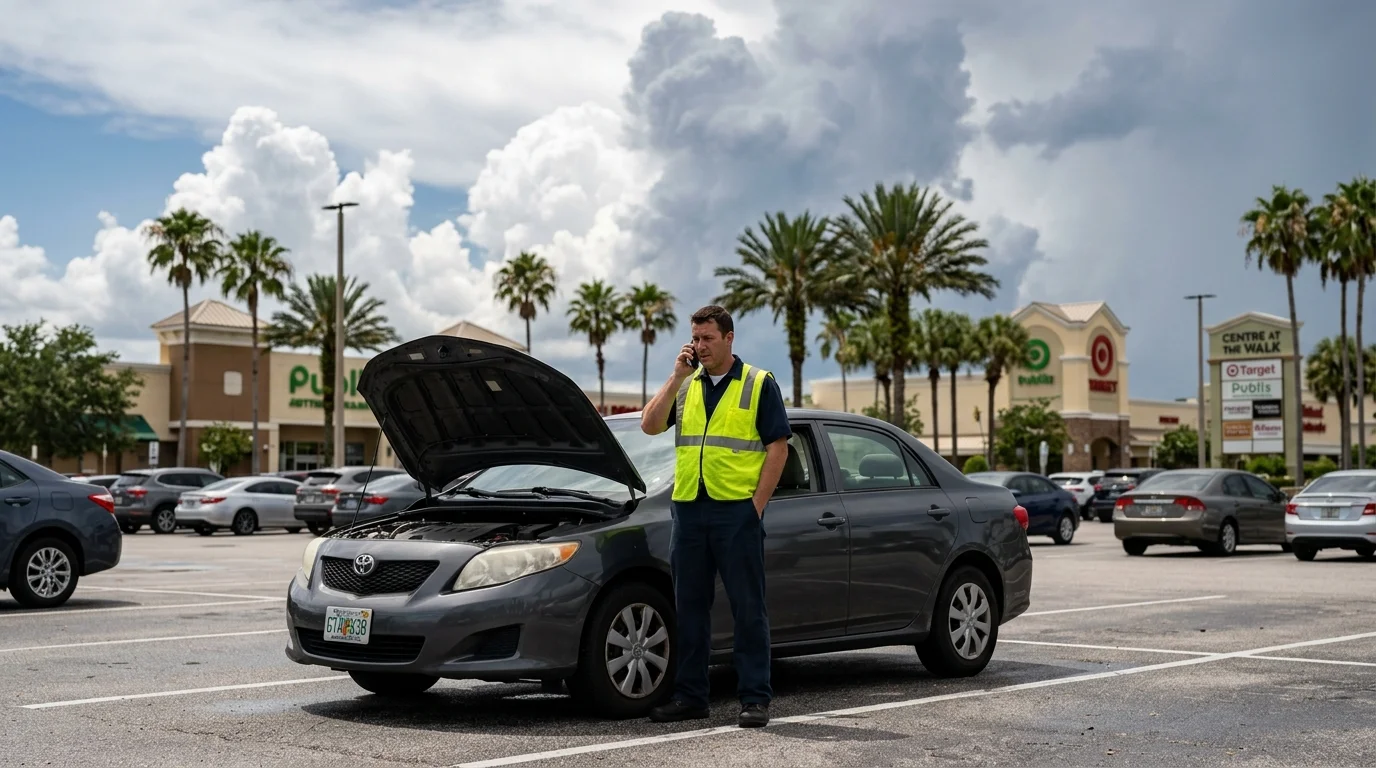
A dead battery or flat tire doesn’t check your insurance card first. Yes, you can request roadside help without using a car insurance benefit. Ask for pay-per-call service, then confirm the work and payment terms before an operator is sent.
Start with whether insurance is required
Car insurance isn’t required just to ask a roadside operator for help. Insurance is one possible way to cover the service. It isn’t the only way to arrange it.
Without roadside coverage, you can ask whether the operator accepts a direct, pay-per-call request. You’ll need to approve the service and its charge yourself. Quick Tow Orlando can connect you with a local operator, but we don’t sell insurance or roadside memberships.
Say up front that you’re calling without insurance coverage. That keeps the request clear from the beginning. It also prevents confusion between direct payment and possible insurance reimbursement.
You don’t need to wait for an insurer before asking what help is available. However, don’t assume an operator’s invoice will qualify for reimbursement later. Policies differ, and the specific terms couldn’t be confirmed from the information available for this guide. Check your policy documents or contact your insurer before relying on reimbursement.
The same approach applies across Orlando. You might be stuck in a Winter Park parking lot, near Lake Nona, or beside a Kissimmee hotel. Start by describing the problem and asking about direct service.
Our roadside assistance service helps connect callers with operators for common breakdown needs. Before approving anything, confirm what the operator will do and how payment works. That’s the cleanest path when no insurance benefit is involved.
Separate insurance coverage from pay-per-call help
Insurance coverage, membership benefits, and pay-per-call help are separate arrangements. Mixing them together can make a stressful call harder.
An insurance policy may include roadside coverage, but inclusion can’t be assumed. Your policy documents should identify any benefit, limits, exclusions, or reimbursement process. Our guide to car insurance and towing coverage in Florida explains what to check before treating a tow as covered.
A roadside membership is another arrangement. It may come from an auto club, vehicle program, financial product, or another provider. Each membership can have its own rules. Confirm that it’s active and that your requested service qualifies before depending on it.
Pay-per-call roadside assistance works differently. You request a specific service without using an insurance claim or membership benefit. The responding operator explains the available service and charge. You decide whether to approve it.
Ask these questions before authorization:
- What service are you sending an operator to perform?
- What charge applies to that request?
- When is payment due?
- Which payment methods can the operator accept?
- Could another charge apply if the vehicle needs towing?
- What happens if I cancel before the operator arrives?
These questions matter more than the label attached to the service. “Roadside assistance” could describe a jump-start request, tire problem, lockout, or another breakdown. The operator needs the actual problem, not just the category.
If cost is your main concern, review our guide to finding affordable roadside assistance in Orlando. It explains how to compare the request without assuming the lowest initial figure covers every possible outcome.
Check who authorizes and pays for the service
The caller, vehicle owner, driver, and person paying aren’t always the same person. Sort those roles out before dispatch.
If you own the car, be ready to identify yourself and the vehicle. If you borrowed it, tell the call taker that you have the owner’s permission. For a rental, employer vehicle, or fleet car, check the applicable agreement or contact before approving outside service. Those arrangements may include instructions that aren’t visible to a roadside operator.
Also explain who’ll meet the driver. The registered owner might be elsewhere while a family member stands with the car. Clear names and contact details help the operator identify the correct vehicle and caller.
Next, confirm who’s paying. Without insurance or membership billing, ask whether payment goes directly to the responding operator. If someone else plans to pay, explain that before service is authorized. Don’t assume a remote card, company account, or third-party payment will be accepted.
If you have roadside coverage but want immediate direct service, contact your insurer about possible reimbursement. Ask what documents it requires and whether you need approval before the call. Keep any itemized paperwork the operator provides. Quick Tow Orlando can’t decide whether an insurer will repay you.
Don’t use an insurance card as proof that roadside service is included. The card identifies a policy, but the precise benefits must be checked with the insurer. Likewise, an app or membership card doesn’t confirm that your current request qualifies.
Before anyone is sent, repeat the arrangement in plain words: the service requested, the person authorizing it, the payer, and the payment method. That short confirmation can prevent a mismatch at the vehicle.
Share the vehicle and location details before dispatch
Good details help the call taker match your problem with an appropriate operator. Start with the vehicle’s year, make, model, and color. Mention whether it’s a car, motorcycle, pickup, van, or another vehicle type.
Describe what happened without diagnosing it yourself. Useful details include clicking during startup, a visibly flat tire, locked keys, warning lights, leaking fluid, smoke, or crash damage. Say whether the vehicle rolls, steers, and shifts into neutral. If you don’t know, say so.
For tire trouble, report whether you have an accessible spare. Mention visible wheel damage or missing wheel hardware. For a battery problem, explain whether the lights and dashboard still work. These observations can change what service makes sense.
Your location needs equal detail. In an Orlando parking lot, give the business name, nearest entrance, row, level, or visible storefront. Don’t rely only on a mailing address inside a large shopping center.
On I-4 or SR 408, identify the road and travel direction. Add the nearest exit, mile marker, interchange, or overhead sign. A phone map pin can help, but read the visible location details aloud too. You can open the FL511 alert list while identifying the nearby corridor.
Tell the call taker where the vehicle sits. A parking space, travel lane, narrow shoulder, garage, and gated lot present different access conditions. Mention low clearances, locked gates, parking controls, or steep ramps.
Turn on hazard lights if the electrical system still works. Stay aware of moving traffic and changing conditions. If there’s a crash, injury, fire, or immediate roadway danger, contact emergency services first.
Before ending the call, repeat the vehicle description and location. Also confirm which person will answer the operator’s call. Accurate information matters more than guessing how long the trip will take.
Know when roadside help becomes a towing call
Some problems may be handled where the vehicle stopped. Others require moving the vehicle to another location. You don’t need to diagnose that difference alone, but the operator needs honest symptoms.
A jump-start request may become a tow if the vehicle still won’t run. A tire request may change if there’s no usable spare, the wheel is damaged, or the car can’t be serviced safely where it sits. A lockout can also involve a separate problem if the vehicle won’t start afterward.
Steering trouble, brake trouble, collision damage, leaking fluid, or a vehicle that won’t roll should be disclosed immediately. Don’t request a simple roadside task while leaving out damage. The wrong description can send an operator prepared for a different job.
Location also affects the decision. A disabled car in an open Orlando parking lot presents different conditions from one on an I-4 shoulder. Space, traffic, vehicle position, and access can determine whether roadside work is practical. The responding operator must assess the actual scene.
Ask where the vehicle would go if towing becomes necessary. Have a repair shop, home address, or another permitted destination ready when possible. Confirm that the destination can receive the vehicle. Don’t assume a closed lot, locked garage, or restricted property will allow delivery.
If the call changes from roadside assistance to towing, pause before approving the new service. Ask what changed and confirm the updated charge. Insurance reimbursement still shouldn’t be assumed.
For an unsafe position, major damage, or a vehicle that can’t be made drivable, ask about emergency towing. Quick Tow Orlando connects callers with local operators. The operator who responds handles the vehicle and evaluates the service needed at the scene.
When to call us
Call when a disabled vehicle can’t be safely handled with the tools and help already available. We’ll connect you with a local operator for roadside assistance or towing based on the details you provide. Call us at (321) 321-9797.